By Eamonn Ryan
In a SAIRAC Cape Town Centre TechTalk, Marcelle de Waal, a senior consulting engineer at One Eighty Materials Engineering Solutions (Pty) Ltd, shed light on the critical aspects of corrosion analysis and prevention in heat exchangers, highlighting the importance of water quality and its impact on heat exchanger longevity, particularly given the financial implications of failures. This is part two of a two-part series.

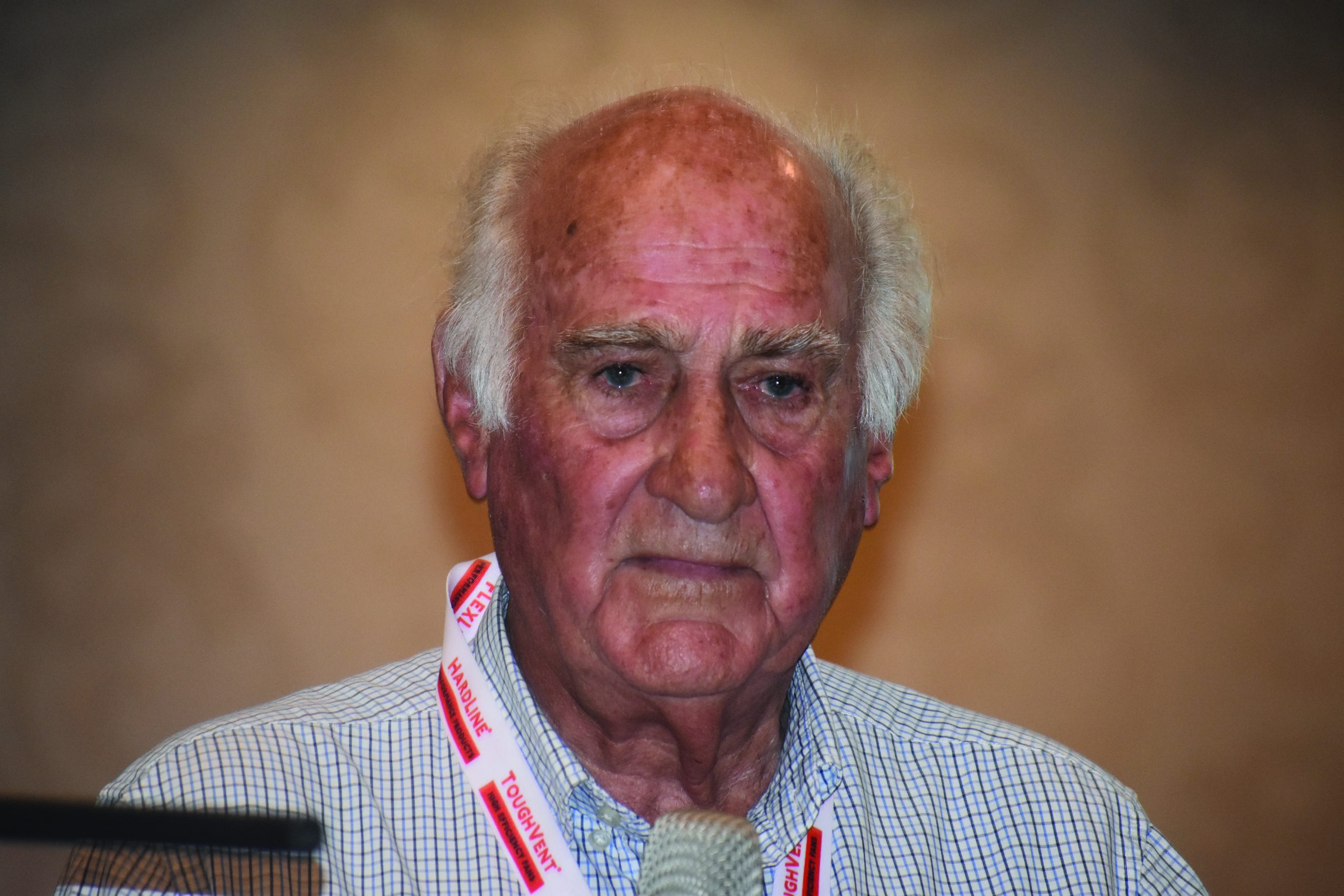
Marcelle de Waal, a senior
consulting engineer at One Eighty
Materials Engineering Solutions. Supplied by One Eighty Materials Engineering Solutions
De Waal outlined One Eighty’s systematic approach to root cause analysis for heat exchanger failures:
- Visual on-site inspection: This initial step involves a site visit by one or more of their consulting engineers to assess the equipment, gather background information and collect necessary samples.
- Lab analysis: Depending on the nature of the damage (mechanical or chemical), this typically includes:
- Mechanical testing: To check material compliance, particularly if material properties like hardness or strength are within the expected ranges for the given material specification. This is
- Recommendations: Finally, One Eighty provides clear recommendations based on their findings to assist their clients in minimising or ideally eliminating the problem. De Waal highlighted key visual indicators of potential corrosion-related failure risks that operators should look out for:
- Discoloration or visual defects: Any change in the visual appearance of components in the system, particularly common when large tube arrays collapse without apparent corrosion, or in cases of buckling or shell deformation in boilers.
- Comparison to OEM standards: All gathered information, including water analysis, material properties, and failure mechanisms, is compared against Original Equipment Manufacturer (OEM) standards and specifications. It is crucial to rule out any likely cause that could potentially contribute to the failure, to identify the root cause.
- Identification of failure mechanisms and triggers: Based on the evidence, One Eighty identifies the primary failure mechanisms (e.g., corrosion, mechanical failure, ruptures) and the potential triggers that led to them.
- Recommendations: Finally, One Eighty provides clear recommendations based on their findings to assist their clients in minimising or ideally eliminating the problem.
De Waal highlighted key visual indicators of potential corrosion-related failure risks that operators should look out for:
- Discoloration or visual defects: Any change in the visual appearance of components in the system, particularly if it deviates from its original commissioned state, signals a need for further investigation to determine the severity and possible consequences.
- Excessive scale formation: Often indicative of poor water quality, this can be seen during maintenance backwashes when water discharge is contaminated, evident by discoloration and/or the presence of solid particles.
- Unusual pressure variation: These can signify blockages or leaks, indicating that corrosion has likely already occurred. Immediate action would be recommended in order to rectify the issue, if possible.
- Decrease in heat transfer efficiency: Excessive scaling can severely impede heat transfer, possibly requiring significant effort or treatment to restore efficiency.
- Deterioration of welds: Clear visual evidence of material loss surrounding welded components would facilitate the need for immediate intervention.
He also addressed the use and accuracy of in-line pH and electrical conductivity sensors. While useful for indicating problems in heat exchanger systems, De Waal cautioned that temperature shifts could affect readings, depending on the design and type of sensor implemented. He suggested that such sensors are likely more accurate on ambient water systems and for systems that make use of either elevated or lower temperatures must use more appropriate hardware or take into consideration adjustment factors that may need to be applied. Ultimately, he recommended taking samples for external, third-party laboratory analysis, and comparing water analyses from before and after commissioning and use of the system to identify deviations from the baseline setting.
Case studies
De Waal then introduced the first case study: a stainless-steel plate heat exchanger installed in a temperature control room at a mushroom produce farm. The issue was excessive water accumulation and ingress into the gas refrigerant compressor unit. Upon cutting the complex, multi-plate unit, One Eighty found brown deposits (rust) and significantly expanded internal passages. The root cause was identified as a freeze-thaw cycle due to faulty control valves and temperature monitoring sensors, which caused volumetric expansion of trapped water, leading to cracking and leaking in the intricate plate design.
While corrosion was present, the primary failure was mechanical due to ice expansion, however the presence of corrosion did raise concern of secondary failure mechanisms that could be prevalent in the existing system. Unfortunately, the complex design meant repair was not feasible, necessitating a full replacement and improved temperature control systems to prevent future occurrences.
The case of the failing condenser/evaporator unit
Another case study involved a condenser/evaporator unit with a carbon steel shell and copper tubing that suffered rapid corrosion and excessive fouling early in its lifespan, producing ‘wet rust’ and necessitating the need to isolate several of the gas line tubes, that repeatedly occurred each time the unit was serviced.The initial key finding was that a degraded galvanised manifold and pipe components in the older closed-loop system were leaching iron into the water.This dramatically increased the water’s electrical conductivity, causing a runaway galvanic corrosion reaction between the carbon steel and copper tubing that flushing couldn’t remedy.
This issue was rectified by way of replacing the corroded system with similar stainless-steel materials and polymer piping, but issue of the continuously corroding heat exchanger continue kept degrading gradually. It was then discovered that the water source, initially led to believe was being treated through sand filtering and pH control means, was from a reservoir meant for agriculture purposes.The water was periodically tested over the span of 10 weeks, whereby the entire water chemistry history was evaluated.The results thereof proved that the water quality was not intended for use in their existing system, due to the excess of multiple, corrosion driving components that combined had corrosive attacked the metallic components of the closed loop system at an accelerated rate.
The core issue was user error, not a design flaw. The client used untreated agriculture water as the source, which contained microbes and elements outside manufacturer specifications. De Waal emphasised that available water isn’t always suitable for heat exchangers, especially closed-loop systems requiring specific water chemistry.
“I stress the importance of providing clear guidelines and instructions to end-users, especially those operating equipment like wine chillers or cool rooms. It’s crucial that if the equipment is run outside of the manufacturer’s or contractor’s recommended specifications, the end- user assumes responsibility for any failures. This is why I believe service providers need to ensure their clients are fully informed and strictly adhere to operational guidelines, which includes performing regular maintenance to catch issues before they get out of hand,” he said.
A key takeaway from this case was the limitation of relying solely on pH monitoring and basic media filtering systems. While the system’s pH was consistently within the acceptable range, the electrical conductivity was significantly elevated, a critical indicator that was initially overlooked due to the lack of information provided by the client. This demonstrates that pH is only one piece of the puzzle; a comprehensive water analysis, including electrical conductivity and other aggressive ions like chlorides and sulphates, is vital for predicting and preventing corrosion.
The discussion also touched on the challenges of operating in remote sites with limited water options. While simply using available corrosive water is detrimental, solutions exist. In such cases, on-site water treatment systems (though potentially expensive and complex, involving filtration and flocculation) or transporting pre-treated, sealed water in reservoirs for the closed-loop system are viable alternatives to prevent long-term damage.
The case of the leaking jacket
De Waal presented a final case study of a jacketed mixing tank with severe leakage from its stud welds, leading to disintegrated thermal insulation and operational issues relating to temperature control of the product.
Analysis, including microscopic examination, confirmed widespread stress corrosion cracking (SCC) along the jacket wall, particularly near welds, with the classic ‘lightning struck’ pattern in the microstructure.
While the stainless steel 316L inner vessel and 304L outer jacket combination is commonly used in the fabrication industry, it’s susceptible to SCC under specific conditions. The critical factor here was extremely poor water quality sourced from municipal feeds, high in total dissolved solids, chlorides and bicarbonates. This corrosive water, combined with existing manufacturing induced stress, created an ideal environment for chloride pitting and widespread SCC, which worsened as system pressure increased to compensate for leaks and temperature losses.
Additionally, a ‘rainbow pattern’ on external weld sides indicated incomplete pickling and passivation, leaving localised regions vulnerable to corrosive attack due to the lack of the stainless steel’s protective oxide layer. The key indicators that were noted for this case study was the difficulty of access for post-weld cleaning of the stud welds, especially if insulating material became wet and degraded, which inevitably created hidden corrosion hotspots. The presence of zinc oxides also suggested upstream or downstream galvanised piping, though this could not be confirmed at the time.
Based on their findings, One Eighty recommended several crucial actions for the leaking jacket case:
- Implementation of a quality welding procedure: To ensure proper welds and minimize localized corrosion susceptibility
- Improved post-weld surface treatments: Specifically, thorough pickling and passivation to restore the protective layer
- Water chemistry control: Directly controlling the water chemistry, including pH balance and getting rid of any galvanised components, replacing them with an all-stainless steel closed-loop system, and if not stainless steel, non-reactive polymers for piping.
- Regular water testing at selected intervals: To provide early warnings of system deviations, which can be implemented during maintenance cycles.
De Waal then broadened the discussion to general preventative strategies, drawing from his extensive experience with various heat exchanger failures, including pinhole failures in copper tubing, issues with galvanised spiral coil heat exchangers, and even cracking in other water reservoirs and cooling towers jacketed systems due to unsuitable local water sources.
Key preventative strategies include:
- Consistent water quality monitoring: Ensuring the water used is within the acceptable ranges as specified by the manufacturer.
- Material compatibility checks: Avoiding incompatible material combinations like stainless steel units with galvanised piping or copper tubing in larger systems, especially if water quality is not rigorously monitored
- Selection of corrosion-resistant materials: Choosing materials that are inherently more resistant to the specific corrosive elements present in the water, considering the galvanic series to prevent sacrificial corrosion, which should be implemented in the initial conception and design phase of the plant/facility/heat exchanger itself.
- Implementing regular maintenance programs: This includes proactive water testing, visual inspections, and addressing issues like scale formation or discoloration promptly.
Just better ‘beast’ 12cfm vacuum pump
A large vacuum pump is an essential tool for HVAC&R (Heating, Ventilation, Air Conditioning and Refrigeration) contractors, providing several key benefits:
A large vacuum pump is a timesaving, high-efficiency tool that helps HVAC&R contractors work on large systems quickly and effectively, while ensuring proper moisture and contaminant removal. Investing in a quality large vacuum pump increases service speed, system reliability and customer satisfaction. For additional information, call +27 (0) 11 620 0300 |

Cyberack SideCooler
Rack-based CW unit for high heat loads. CyberRack SideCooler is a water-cooled unit specifically designed to meet the demands of modern edge applications and micro data centres. The unit can be flexibly integrated as a space-saving closed-loop system directly between server racks or within a micro data centre. This enables cooling to occur directly at the heat source.
Product overview:
Most important features:
Particularly in environments with higher heat loads, where efficient and flexible air conditioning is essential, the CyberRack SideCooler stands out with its compact design, easy integration, and high ease of maintenance while offering a future-proof solution with a clear focus on energy efficiency. For additional information, contact +27 (0) 11 397 2363 |

Actom’s localised inverter-integrated transformer solution
ACTOM recently launched a breakthrough in renewable energy integration at Enlit Africa 2025, with its localised inverter-integrated transformer. It is a fully integrated, factory-tested solution designed to meet the growing demand for utility-scale solar PV projects. It combines a transformer, inverter, Ring Main Unit (RMU) and LV combiner box into a single, skid-based, plug-and-play system. This not only reduces on-site complexity but also significantly cuts installation time, project risk and lifecycle costs. With solar PV now the dominant focus of public and private energy investment across the continent, this launch couldn’t come at a better time. The integrated solution directly supports the development of solar farms, particularly by Engineering, Procurement and Construction (EPC) contractors who benefit from pre-tested, factory-assembled systems that minimise on-site challenges and accelerate project commissioning. While initially developed for solar farms, the inverter-integrated transformer is equally suited to broader energy applications such as Battery Energy Storage Systems (BESS), where it can help stabilise grids, support off-grid setups, and address generation shortfalls during peak demand or load shedding. This technology offers a scalable pathway to expand Africa’s renewable energy capacity while reducing our carbon footprint. It’s a practical solution with the potential to reshape how we power the continent. For additional information, call +27 (0) 10 136 0216 |

Castel introduces 34-E high-pressure valves for CO2 systems
|