By Eamonn Ryan
In a SAIRAC Cape Town Centre TechTalk, Marcelle de Waal, a senior consulting engineer at One Eighty Materials Engineering Solutions (Pty) Ltd, shed light on the critical aspects of corrosion analysis and prevention in heat exchangers, highlighting the importance of water quality and its impact on heat exchanger longevity, particularly given the financial implications of failures. This is part one of a two-part series.

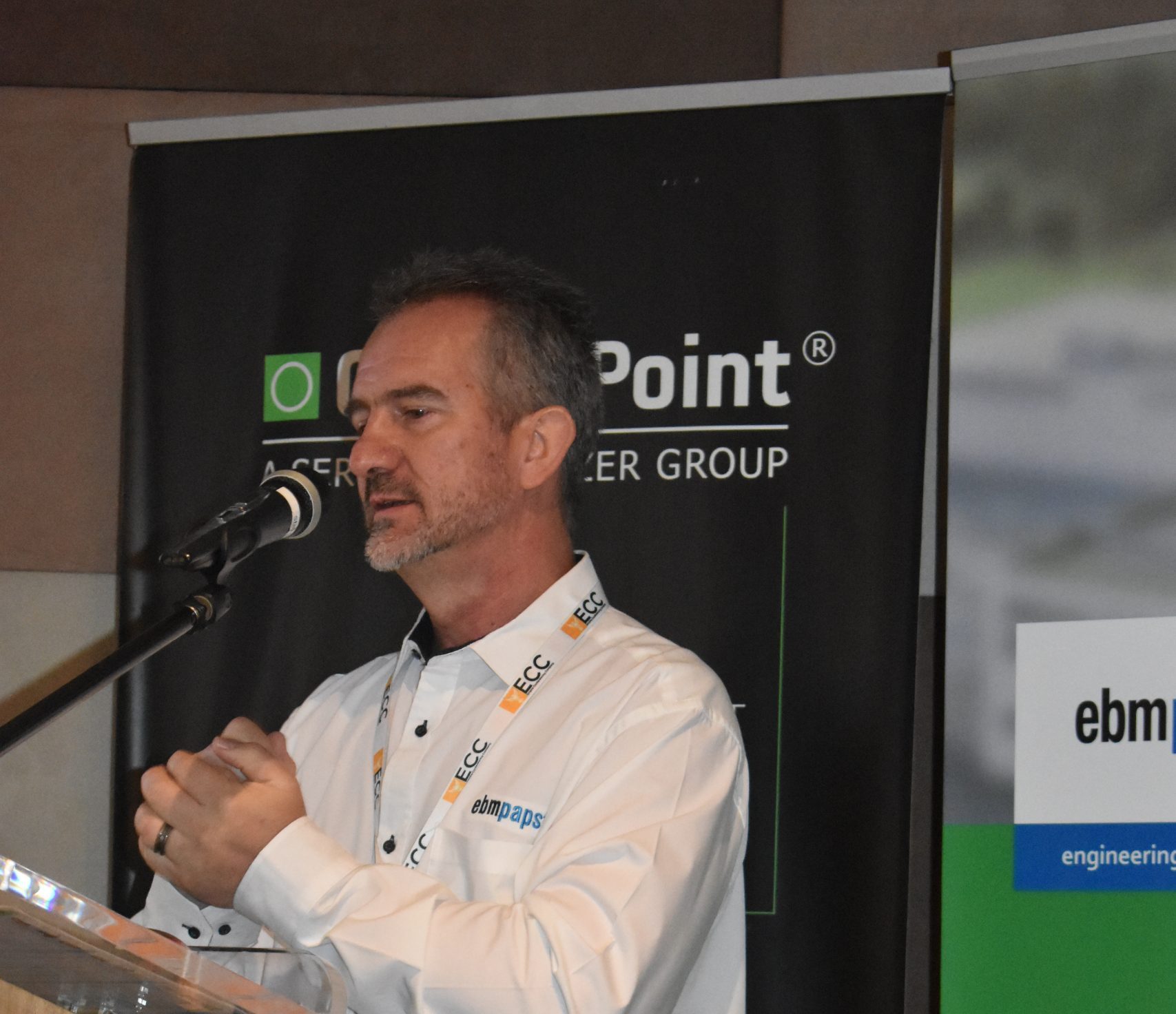
Marcelle de Waal, a senior
consulting engineer at One Eighty
Materials Engineering Solutions. Supplied by One Eighty Materials Engineering Solutions
De Waal provided an overview of common industrial heat exchanger types, such as shell-and-tube and plate designs, made from both ferrous and non-ferrous materials. These are widely used in applications from boilers to chillers, essentially any system transferring heat.
The core of De Waal’s talk revolved around water chemistry, pinpointing it as a primary driver of corrosion in heat exchangers, particularly on the water side of the heat exchanger design. He identified several key elements and parameters in water analysis that significantly contribute to corrosive processes:
- High or low pH levels can accelerate chemical reactions between water and certain metal alloys, speeding up corrosion and reducing the expected lifespan of the heat exchanger. Similarly, elevated electrical conductivity can create a runaway reaction, especially in bimetallic systems that become susceptible to galvanic/bimetallic corrosion.
- Leaks of ammonia into the system or overall increased ammonia content can lead to significant corrosion, particularly in copper alloys, causing dealloying and embrittlement.
- High calcium content can lead to scale formation, which in turn promotes crevice corrosion and reduces overall thermal heat transfer efficiency.
- High chloride levels are extremely aggressive towards stainless steels, which typically result in pitting corrosion and stress corrosion cracking.
- As a system degrades, iron content from ferrous based alloys components (such as carbon steel) can leach into the circulating water supply, increasing the electrical conductivity and accelerating the likelihood and rate of galvanic corrosion in bimetallic systems.
- Copper content and sulphates are often linked to microbial- induced corrosion, that consequently leads to pitting corrosion and blockages caused by excess fouling.
- Turbidity, typically an indicator of suspended solids in the water supply, can introduce a plethora of elemental constituents that inevitably lead to the formation of scale, corrosive attack, blockages and more.
De Waal noted that heat exchanger manufacturers meticulously design their equipment to operate within a narrow pH range, often between 6.8–8.9, as significant deviations can cause various corrosive issues, or be partially contributable. Often, as with almost any commercially available piece of hardware, manufacturers typically issue guidelines to their clientele in order to ensure the best optimal conditions and promote longevity of their product. He also referenced the SANS 241 code for potable water, which outlines allowable water quality parameters that are safe for human consumption and closely aligns with general manufacturers guidelines that are adjusted to a stricter quality standard.
The most aggressive corrosion parameters depend on the material. For stainless steels, high chloride content is particularly detrimental, which is due to the electrochemical reactions that strip the stainless steel of its sub-nanometer thin protective passive oxide layer. Without this passive oxide layer, the stainless-steel alloying elements are able to react with the chemical components of the water, resulting in corrosion. In copper tube systems, ammonia poses a significant threat, leading to dealloying and embrittlement. Additionally, elevated iron content dramatically increases electrical conductivity, accelerating galvanic corrosion in bimetallic systems like carbon steel shells with copper tubing, creating a self-destructive, negative feedback loop.
- De Waal detailed the potential risks associated with various out-of-specifications parameters:
- pH: pitting and stress corrosion cracking in stainless steels.
- Electrical conductivity: increased potential for galvanic corrosion in bimetallic systems.
- Chlorides: localised pitting and crevice corrosion, especially around welded components of stainless steel alloys.
- Sulphur: dealloying of copper materials and increased risk of stress corrosion cracking in both copper and stainless steels alloys.
- Ammonia and nitrates: weakening of the passive oxide layer in stainless steels and stress corrosion cracking or dealloying of brass and copper alloys.
- Water hardness: excessive scale formation, leading to crevice corrosion and loss of thermal efficiency.
- Dissolved oxygen: provides oxygenated environment that promotes the formation of oxides (uniform- and localised-pitting corrosion) and promote an ideal micro-organism ecosystem that can lead to microbiologically-induced corrosion.
- Microbiological saturated water supplies: excessive microbial attack (biofouling) and scale formation.
De Waal presented a case study involving ammonia-induced stress corrosion cracking (SCC) in copper alloys. He showed microscopic images revealing ‘lightning crackling’ effects through the copper microstructure, indicating the devastating impact of ammonia.
Ammonia can enter the system through refrigerant gas leaks or even through the introduction of cleaning agents, such as bleach, added to the water supply in an attempt to curb the growth of microbiological organisms, which contains ammonia. He stressed that proper water treatment and avoiding unauthorised chemical additions are paramount for preventing such severe corrosion.
Subtle signs, like a subtle to rapid drop in gas pressure without clear visible pipe damage, can indicate a high likelihood of stress- corrosion cracking that isn’t always presented with evidence of typical surface oxide or rust. De Waal recounted an experience with a freon gas system in a factory where long sections of stainless steel 304L pipes suspended along the various parts of the factory were exposed to an environment rich in calcium carbonate (limestone) and excessive moisture due to condensation and rain.The combination of environmental exposure and physical inherent stress from the pipe’s own suspended weight provided the necessary conditions to induce stress corrosion cracking.These cracks could only be visibly identified by the subtle gas-discharge and through non-destructive inspection tools, such as dye-penetrant testing. Stress corrosion cracking is a complex phenomenon requiring both a corrosive medium (like chlorides for stainless steel or ammonia for copper/ brass) and a form of applied/inherent stress within the system.
De Waal further broadened the discussion to other common forms of corrosion:
- Sulphide pitting: occurs when sulphur compounds in water are significantly elevated, often in conjunction with microbiologically induced corrosion.
- Erosion: caused by turbulence and high velocities in the fluid flow, which can slowly erode the wall thickness of pipes, especially at bends. Proper thickness, diameter and flow velocity are crucial for prevention.
- Dealloying: as seen in copper alloys, this process involves the selective removal of specific elements from the microstructure, leaving behind a brittle and weak ‘skeleton’ that eventually leads to either corrosion, mechanical failure, or worse-case scenario, both.
Focusing on stainless steels, de Waal reiterated that they are susceptible to stress corrosion cracking, often induced by chlorides. Other common corrosion types in stainless steels include:
- Pitting: localised corrosion that creates small pin holes or perforations in the material.
- Crevice corrosion: typically occurs in confined spaces, like certain pipe joints or low flow velocity cavities within the system, where stagnant conditions and chemical differences can accelerate corrosion within these localised zones. He highlighted the importance of proper welding procedures and post-weld cleaning to prevent these hot spots to be excessively susceptible to corrosive attack of this nature.
- Microbiologically Induced Corrosion (MIC) or biofouling: caused by bacteria, such as sulphur-reducing bacteria, can clog systems, reduce efficiency and degrade materials. While most systems often use treated water free of bacteria, or add oxidisers to kill bacteria, untreated water sources rampant with microbial life can increase the likelihood of microbiological induced corrosive attack.
For carbon steels, the most common corrosion mechanism is oxidation, which results in the familiar red-brown rust to form uniformly across the materials surface. This is more evident in systems with elevated temperatures, as higher temperatures accelerate the corrosion rate. In lower-temperature systems, corrosion typically occurs at a slower rate and becomes only noticeable after multiple service maintenance periods, where backwashes are observed to have become noticeably red and cloudy in appearance. He stressed the importance of considering the shell side of carbon steel heat exchangers, as similar degradation can also occur externally if the protective paint coating system is not carefully maintained.
There are vast a number of relevant industry standards used in corrosion evaluation, typically incorporated during the design conception of the heat exchanger, on a case-by-case basis.
The use of standards are not limited to only design but also incorporated in maintenance plans and subsequent failure analysis testing when required. Due to the vast list of standards available, thorough research of the relevant standards are required to ensure systems such as heat exchangers remain operational for their intended purpose.
Addressing preventative measures, DeWaal stressed the importance of not interfering with a system unless done by a qualified servicing agent who should know the system’s specific requirements and limitations, guided by the heat exchanger’s manufacturer.
De Waal recommended utilising testing laboratories that are accredited (SANAS) for water analysis, evaluating the water chemistry and verifying their compliance with standards like SANS 241 or as specified by the manufacturer. He advised clients to provide the heat exchanger’s manual, as it specifies crucial water quality parameters for benchmarking. One Eighty integrates such water analysis results with material analysis techniques to offer a holistic understanding of corrosion issues and identify the root cause of the problem.
De Waal highlighted a common challenge: clients often send water samples to water testing laboratories that test against drinking water standards, receiving feedback that the water is ‘within acceptable ranges’. However, potable water standards are often insufficient for the highly specific requirements of heat exchanger systems. “Your manual will have a very specific range,” he stressed, pointing out that heat exchanger manufacturers specify much finer tolerances for certain physical characteristics or chemical properties than what typical drinking water regulations typically offer.
Regarding dissimilar metal corrosion, DeWaal explained that the risk of galvanic corrosion depends on how far apart the metals are on the galvanic series chart, which indicates the galvanic potential difference. He noted that zinc, aluminum and magnesium are more anodic, while copper and its alloys are more cathodic.These metal alloys are inherently not corrosive by themselves, but when coupled with an electrolyte (such as water), galvanic corrosion can occur.
This happens through an electrochemical reaction, that results in the more anodic metal to corrode.The key is to select bimetallic combinations that are as close as possible on the galvanic series to minimise the galvanic potential difference that would induce corrosive attack.Alternatively, galvanic corrosion can also function as a type of protective system, whereby a low-cost material is ‘sacrificed’ in order to protect a more costly and inherently corrosive susceptible metal from failing.One such example, was citing zinc anodes protecting carbon steel ship hulls that enable the longevity of the carbon steel plates against sea water by using the relatively low cast zinc anode blocks as sacrificial material. Stainless steels systems that consist of similar alloy types, such as 304 or 316, can effectively be paired together to form a type of heat exchanger in order to minimise material cost, without having a significant galvanic potential difference.