By Eamonn Ryan
At an AHI Carrier customer event last year titled ‘Feel the Change’, a bold vision for the future of HVAC technology was unveiled, emphasising a shift towards more environmentally friendly products and solutions.

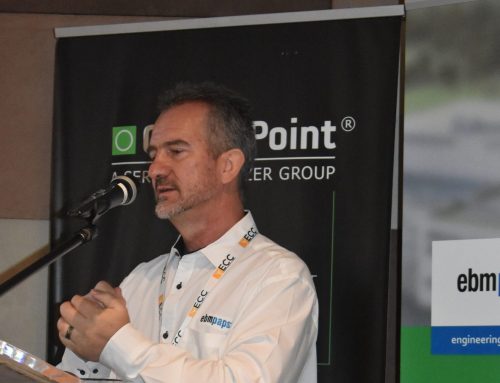
Harris Prousalogou, product and solutions development manager at AHI Carrier Fzs. © RACA Journal
Harris Prousalogou, product and solutions development manager at AHI Carrier Fzs, presented a number of project case studies whereby Toshiba products and methodologies had resulted in enhanced energy efficiency and reduced environmental impact within the built environment.
One of the innovations highlighted was the introduction of the new SHRM Advance (Super Heat Recovery Multi Advance). The presentation also featured the Multi Split System air conditioners, designed specifically for residential applications.
A key focus of the presentation was integrating product efficiencies and capacities into holistic system designs. Prousalogou emphasised the importance of considering not only environmental benefits but also operational and financial gains for end-users and building operators.
Prousalogou highlighted a critical statistic: approximately 40% of energy consumption in buildings is attributed to heating, ventilation and air conditioning (HVAC) – and process heating.
In terms of the regulatory landscape, there are specific mandates in many countries including South Africa requiring a significant percentage of the energy for hot water production to come from environmentally friendly sources requiring verification.
Case studies in action
The following two case studies by Prousalogou showcase successful implementations of AHI Carrier’s solutions. These real- world examples provided insights and inspiration for architects, engineers, and developers looking to integrate into their projects sustainable and holistic hybrid HVAC solutions – which combine energy efficiency while catering to environmental issues.
Project one: plot c397, Abu Dhabi, UAE
The first case study centres around a ground and 12-floor residential building in Abu Dhabi, housing 230 apartments of various sizes, from single to three-bedroom units. AHI Carrier was called in to ‘comment and advise’ in order to optimise an already designed HVAC solution, in the hope of significantly enhancing energy efficiency and environmental sustainability.
The pre-existing design was robust, including air-cooled screw chillers with fixed-speed compressors and traditional electric water heaters for apartment sanitary water production. AHI Carrier proposed a substantial upgrade by replacing these systems with:
- Space cooling: air-cooled screw chillers with high- efficiency variable speed compressors and heat reclaim features – terminal fan coil units (TFCUs) and fresh air handling units (FAHUs)
- Sanitary hot water: instantaneous heating unit interfaces utlising the energy reclaimed from the cooling system
The upgraded chillers not only cater to the building’s cooling demands year-round but also recover waste heat for hot water production through integrated energy storage tanks. This innovative approach harnesses energy that would otherwise be wasted, resulting in significant energy savings. AHI Carriers’ simulations estimate a reduction of 50%+ in total system energy consumption, translating to approximately 2.3 million kilowatt- hours saved annually.
AHI Carriers’ approach started with a thorough understanding of the building’s requirements and environmental conditions in Abu Dhabi. Detailed analysis of weather patterns and solar irradiation informed their HVAC simulations, crucial for accurately predicting cooling and heating loads throughout the year.
The design process involved creating detailed 3D representations and simulations using advanced tools like HAP (Hourly Analysis Program). This enabled AHI Carriers to visualise the system layout and calculate precise energy requirements, ensuring optimal performance under Abu Dhabi’s climatic conditions. This revealed that cooling in this environment was a mandatory requirement.
Central to this innovation strategy was the Heating Unit Interfaces (HUIs), compact heat exchangers designed to instantaneously heat water from 15-17°C to target temperatures of 55-60°C. By utilising reclaimed energy from the chillers, AHI Carrier replaced 780 traditional electric water heaters with 230 HUI units which utilise no energy, thereby significantly reducing energy consumption for water heating in the project.
The environmental benefits of this upgrade are substantial. Through simulation and analysis, AHI Carrier estimated a 60.5% reduction in CO2 emissions for the building. This equates to an annual reduction of approximately 1.3 million kilogrammes of CO2 emissions, representing its positive impact on climate change mitigation.
Beyond environmental gains, the upgraded system offers operational efficiencies and cost savings. The system’s Energy Efficiency Ratio (EER) of 5.45 represents high performance and economic viability, providing significant long-term savings in operational costs for building owners and residents alike. This is double the ratio of the previous design.
Moreover, AHI Carrier ensured seamless integration and monitoring through a Building Management System
(BMS), which oversees the entire HVAC system’s operation. This centralised control not only optimises performance but also enhances reliability and responsiveness to varying environmental conditions.
The project’s impact extends beyond energy and environmental realms. By replacing traditional water heaters with HUIs, AHI Carriers eliminated stagnant water issues, reducing potential microbial risks and minimising the need for additional water treatments. The compact design of HUIs also translates into space savings and simplified installation, further streamlining building operations and reducing construction complexities.
Photos from the installation and commissioning process highlight the effective application and success of AHI Carriers’ solutions. As they work to enhance and expand their sustainable HVAC offerings, AHI Carriers continues to play a leading role in advancing building technology, establishing new standards for energy efficiency and environmental responsibility.’

Project Two: Plot C396, Abu Dhabi, UAE
Project two: plot c396, Abu Dhabi, UAE
Following the success of their first project in Abu Dhabi, AHI Carrier embarked on another project, this time optimising HVAC solutions for a multi-floor residential building comprising 131 apartments. This project, also located in the UAE, showcases a different design approach aimed at maximising energy efficiency and sustainability though the requirements were the same: heating, cooling and water reduction.
The initial design for the building utilised Toshiba’s VRF heat pump systems for space conditioning of the apartments and the common grounds; FAHUs with DX coils and VRF CDUs for the air treatment of the apartments and the common grounds; along with conventional electric water heaters for domestic hot water in the apartments.
AHI Carrier was again called in to enhance the system’s efficiency by integrating advanced technologies and sustainable practices.
AHI Carrier proposed a comprehensive solution that included Toshiba VRF systems for space conditioning of the apartments and the common grounds; air to water heat pumps and FAHUs for air treatment; heating unit interfaces utilising heat captured by solar panels and the air-to-water heat pump for sanitary hot water during cooling cycles to supplement hot water requirements, ensuring efficient energy use throughout the year.
This resulted in annual power savings of 73.7% compared to the standard solution in SHW on energy consumption and GHG emissions, for a return on investment of 6.7 years.
To further enhance sustainability, AHI Carriers incorporated passive solar systems atop the building’s water storage tanks. Space limitations meant only 150m2 was available for solar panels, and simulations showed it would deliver only 20-23% towards the building’s hot water needs through solar energy, which was insufficient, which is why a water reclamation heat pump solution was adapted.
The system design includes intricate piping systems that facilitate heat reclamation from the heat pumps and solar panels into the storage tanks. This stored energy is then distributed via manifolds to the heating liquid phases throughout the building. This holistic approach not only maximises energy efficiency but also minimises operational costs and environmental impact.
AHI Carrier navigated local regulatory challenges by utilising available technologies from Cairo and Riyadh, as specific products like the SHRM were not yet certified for use in the UAE. This adaptive approach points to flexibility and expertise in tailoring solutions to meet regional regulatory requirements while maintaining high standards of performance and efficiency.
Central to the project’s success is the implementation of a BMS that monitors and controls all HVAC components, including chillers, heat pumps, VRF systems, and hot water production units. This centralised oversight ensures optimal system performance and responsiveness to varying environmental conditions.
Register for free to gain access the digital library for RACA Journal publications