By Eamonn Ryan
The HVAC industry is entering a decisive new era as low-carbon technologies move from niche applications into mainstream adoption.
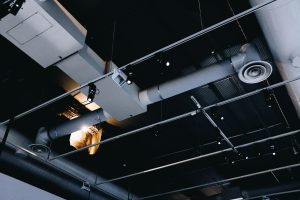
A low angle shot of a metal black ceiling with white ventilation pipes. Wirestock | Magnific.com
Across commercial buildings, industrial facilities and residential developments, pressure to reduce greenhouse gas emissions is accelerating investment in energy-efficient heating, cooling and ventilation systems.
Governments worldwide are tightening environmental regulations, while building owners increasingly seek sustainable solutions that reduce operating costs and improve long-term asset value. The result is a major transformation in the technologies shaping the HVAC sector.
One of the most significant developments is the growing adoption of heat pump technology. Modern heat pumps offer highly efficient heating and cooling while consuming considerably less energy than traditional fossil-fuel-based systems. Advances in inverter compressors, refrigerants and cold-climate performance have expanded their suitability across a wider range of environments.
Variable refrigerant flow (VRF) systems are also becoming increasingly popular in commercial applications. These systems allow precise zoning and energy management, enabling buildings to optimise comfort levels while minimising unnecessary energy use. Combined with smart building controls and occupancy-based automation, VRF systems can significantly reduce carbon emissions.
Refrigerant selection is another critical focus area. The phase-down of high global warming potential (GWP) refrigerants is driving the adoption of lower-GWP alternatives such as R-32, R-454B and natural refrigerants including CO₂ and propane. Manufacturers are investing heavily in redesigning equipment to meet evolving environmental standards while maintaining system performance and safety.
Building electrification is further reshaping the market. As countries pursue net-zero carbon targets, electrified HVAC systems powered by renewable energy sources are becoming increasingly attractive. Solar-assisted HVAC installations, thermal energy storage and intelligent energy management systems are helping buildings reduce dependence on fossil fuels.
Digitalisation is also playing a major role in supporting low-carbon HVAC strategies. Advanced monitoring systems, predictive maintenance tools and artificial intelligence are improving equipment efficiency and extending operational life cycles. Smart analytics allow facility managers to identify inefficiencies early and optimise system performance continuously.
However, the transition is not without challenges. Higher upfront costs, skills shortages and evolving regulatory requirements continue to create barriers for some markets. Contractors and technicians require ongoing training to work safely with new refrigerants and advanced technologies.
Despite these obstacles, industry momentum continues to build. Investors, governments and consumers are increasingly prioritising sustainability, making low-carbon HVAC technologies a central component of future building design.
For the HVAC industry, the shift represents more than a technological upgrade. It signals a long-term transformation in how buildings are heated, cooled and ventilated in a carbon-conscious world.