By Eamonn Ryan
In a recent mining ventilation presentation, by Dr Johan Kielblock one sentence lands like a punch: cooling power enhances productivity, but is wasted in the event of poor levels of worker fitness. Hidden inside that line is a deeper idea: that much of today’s workforce is less physically fit than previous generations, and that poor fitness and fatigue, not just environmental conditions or equipment failure, are increasingly contributing to workplace accidents.
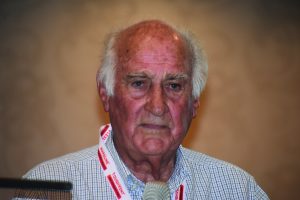
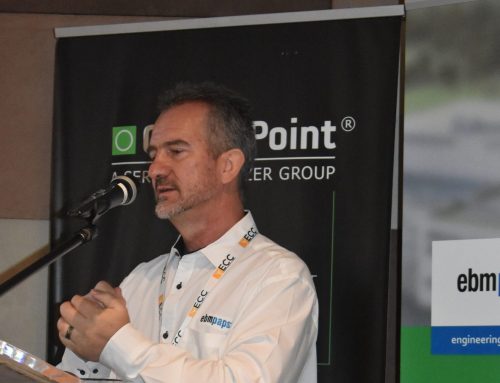
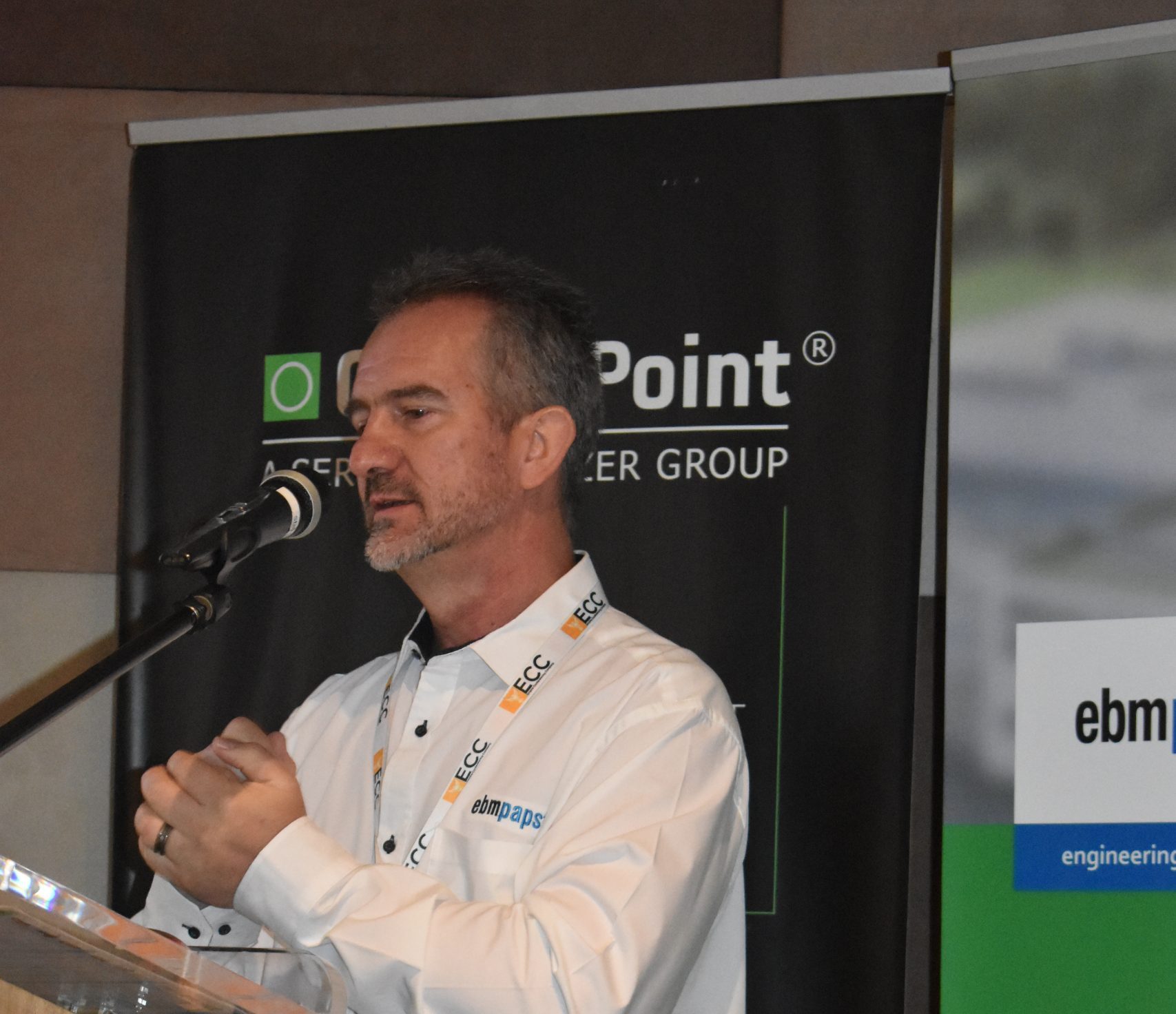
Dr Johan Kielblock spent much
of his career with the Chamber
of Mines Research Organisation (COMRO), where he specialised in heat physiology, heat stress management and worker fitness in
deep-level mining. He was closely involved in developing the Heat Tolerance Screening (HTS) system that replaced older acclimatisation
methods. © RACA Journal
For HVAC&R, construction, manufacturing, logistics, data centres and even office environments, the same underlying question applies: are we pouring capital, intelligence and engineering into controlling the environment, while largely neglecting the conditioning of the people inside it?
Across industries, there is a quiet assumption that if we control the environment well enough, people will be safe and productive. In HVAC&R, this assumption is baked into our identity. We design to maintain temperature, humidity, air movement and air quality within acceptable ranges. In hospitals, cold rooms, process plants, cleanrooms, data centres and office towers, success is defined in terms of stability and compliance with standards.
THE MISSING VARIABLE IN ENVIRONMENTAL CONTROL
The evidence exposes a blind spot. All our indices and standards implicitly assume a certain kind of worker: an individual whose cardiovascular fitness, metabolic capacity and recovery ability fall within a ‘normal’ band. Heat stress indices assume a typical metabolic rate. Thermal comfort standards assume a typical capacity to cope with small deviations from the setpoint. Risk models often treat the human as a constant. What happens when that constant is, in reality, changing?
HVAC&R is facing its own version of this shift. The technical workforce is ageing. Off the job, lives are more sedentary: longer time in vehicles, more time on screens, less incidental physical activity. Work patterns can be irregular, with night call-outs, overtime, tight deadlines and extended shifts.
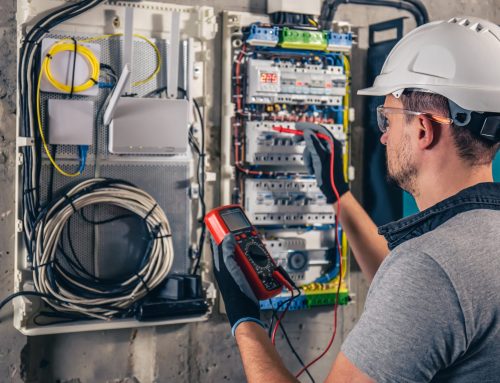
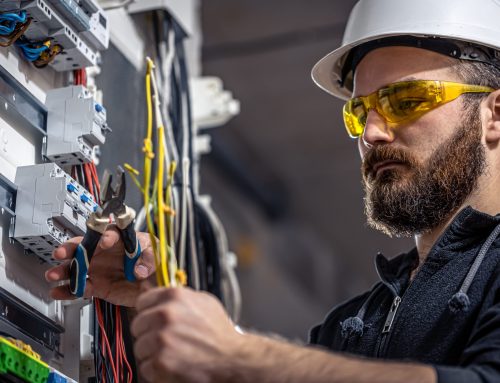
Yet the physical demands of many HVAC&R roles remain stubbornly real. Technicians climb ladders, carry tools and components through tight access ways, work under roofs in high solar load, crawl through ceiling voids, and operate in boiler rooms and plant spaces where the ambient climate bears little resemblance to the nicely conditioned areas the systems are designed to serve.
We’ve become extremely sophisticated in modelling plant loads and system response, but, in comparison, we rarely model the loads on the human body.
WHEN FATIGUE BECOMES THE REAL SAFETY RISK
A worker with poor cardiovascular fitness pays a different physiological price for the same task. Heart rate rises faster, recovery is slower, and cognitive performance deteriorates earlier under heat and stress. Fatigue accumulates over successive tasks, increasing the likelihood of mistakes in environments where even a momentary lapse can have serious consequences.
Cooling the space does not automatically solve the problem. A technician working in a hot plantroom or on a roof may still be operating close to their physiological limits, regardless of conditions elsewhere in the building.
The presentation also argued that poor fitness and fatigue often sit behind labels such as ‘human error’ or ’failure to follow procedure’. Yet investigations rarely examine the cumulative effects of overtime, repeated call-outs, thermal exposure and inadequate recovery in the days leading up to an incident.
Dr Johan Kielblock spent much of his career with the Chamber of Mines Research Organisation (COMRO), where he specialised in heat physiology, heat stress management and worker fitness in deep-level mining. He was closely involved in developing the Heat Tolerance Screening (HTS) system that replaced older acclimatisation methods.
DESIGNING FOR HUMAN CAPACITY, NOT JUST PLANT PERFORMANCE
If we take this perspective seriously and translate it into an HVAC&R context, several things change.
Environmental design remains essential, but we would stop treating temperature, humidity and air quality control as the whole answer. Risk assessments would explicitly recognise that these controls are being applied to a workforce whose average fitness and resilience may be lower than the industry was implicitly designed around.
We would also move beyond simply declaring workers “medically fit for work” and consider whether their functional capacity matches the physical demands of specific HVAC&R tasks.
At the same time, the industry would begin treating fatigue management, pacing and recovery as professional practices rather than signs of weakness. Reporting fatigue would be seen as useful operational data, not a complaint.
Finally, we would use environmental control more strategically by focusing on where people experience the greatest physiological strain, not simply where equipment requires cooling.
And when incidents occur, investigations would look beyond ‘failure to follow procedure’ to examine the preceding days and weeks of overtime, shift length, call-out frequency, thermal exposure and workload peaks that may have contributed to fatigue.
Viewed this way, environmental control undoubtedly enhances safety and productivity, but some of its value is lost when we ignore the conditioning and fatigue of the people doing the work.
The next frontier, then, is not just the highly efficient chiller, the elegantly controlled BAS (Building Automation System), or the ultra-tight cold chain. It is the integration of human physiology into how we design, schedule and manage work.
Only when cooling power and human power are considered together – rather than as separate domains – will we really be able to say that our systems are designed for the realities of the people who live and work within them.