Compiled by Eamonn Ryan
Heat pumps are rapidly gaining traction as a solution for building HVAC and water heating, supporting the industry’s shift away from electric resistance systems and fossil fuel boilers. Offering strong energy efficiency, lower operating costs and a reduced carbon footprint, heat pumps are emerging as a cornerstone technology in the transition to more sustainable HVAC systems.
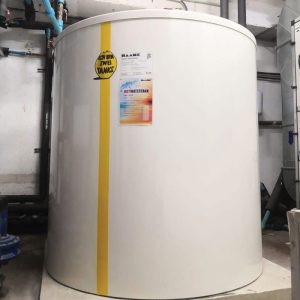
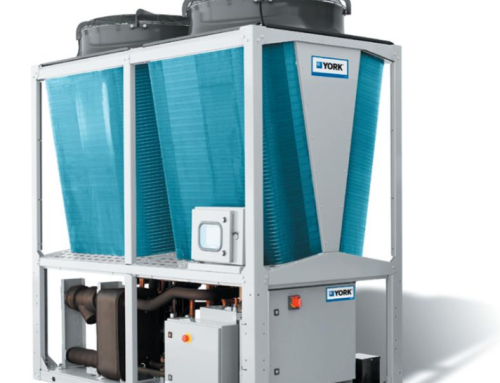
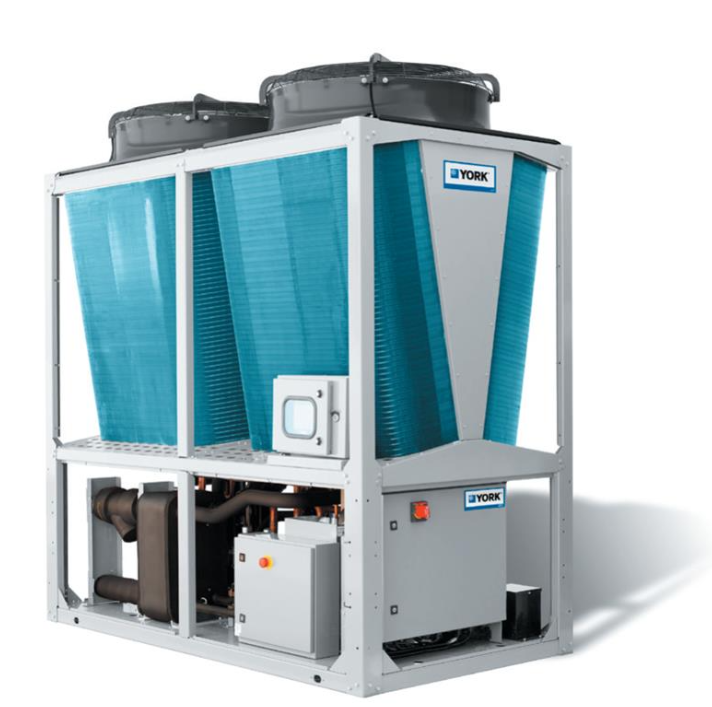
Heat pump destined for Mr Heat Pumps. Supplied by Mr Heat Pumps
The fourth Industrial revolution (Industry 4.0) is driven by connectivity and intelligent control. Modern heat pumps align naturally with this approach, using advanced controls, sensors and cloud-based monitoring to optimise performance in real time. Today’s systems can detect occupancy, monitor indoor air quality, identify performance issues before failure occurs, and enable predictive maintenance.
For South Africa, where energy reliability and rising electricity costs are ongoing concerns, these capabilities are particularly valuable. Smart heat pump systems can reduce peak demand, improve operational efficiency and minimise unexpected downtime – critical benefits for both commercial and residential applications.
Globally, the move toward decarbonisation and electrification is accelerating heat pump adoption. While South Africa’s grid remains carbon-intensive, heat pumps still offer substantial efficiency gains compared to resistance heating and fossil-fuel systems. When combined with on-site solar PV – a growing market locally – heat pumps become even more compelling, allowing excess daytime solar energy to be stored as thermal energy rather than exported or curtailed.
On the air-source side, continuous improvements are addressing performance challenges during extreme weather, while on the water-source side, growing demand is driving more cost-effective solutions such as ambient temperature loops and district energy concepts. These approaches have strong potential in campuses, hospitals, mixed-use developments and industrial facilities across South Africa.
Tech advancements shaping the sector
Recent developments include dual-source heat pumps that can switch between air and water as heat sources, heat recovery systems capable of producing heating and cooling simultaneously, and high-temperature heat pumps that can serve legacy hot-water systems without major upgrades.
Low-GWP (global warming potential) refrigerants, including CO₂-based systems, are expanding the application range of heat pumps, enabling higher supply temperatures suitable for retrofits and process heating. These advances are opening new opportunities in sectors traditionally dominated by boilers.
As heat pump technology evolves, so too must the skills of engineers, installers and technicians. Industry 4.0 places greater emphasis on data interpretation, system integration and advanced control strategies. Local training, upskilling and professional development will be critical to ensure systems are correctly designed, installed and maintained.
Data is increasingly central to system performance. Built-in diagnostics and remote monitoring allow faults to be identified early, reducing maintenance costs and improving reliability – an important consideration in a market where service access and downtime can be challenging.
What do you know about heat pumps?
Heat pumps continue to gain momentum across the HVAC sector, driven by decarbonisation targets, regulatory change and rapid advances in technology. In a CAREL-hosted webinar, two industry experts unpacked the fundamentals of heat pump technology, explored market and regulatory trends, and tested participants’ knowledge through interactive quizzes.
The session was led by Miriam Solana Ciprés, from CAREL’s Knowledge Centre, who focuses on HVAC regulations and market trends, alongside Matteo Valerin, national sales manager for CAREL Nordic, specialising in residential applications including heat pumps.
With more than 400 participants online and over 150 questions submitted, the webinar highlighted the level of interest – and the complexity – surrounding heat pumps today. A key theme of the webinar was the role of heat pumps in global decarbonisation efforts. As countries work towards emissions reduction targets under the Paris Agreement, heat pumps are increasingly viewed as a viable alternative to fossil fuel-based heating systems.
Ciprés noted that replacing traditional boilers with heat pumps can significantly reduce CO₂ emissions, particularly as electricity grids continue to decarbonise. Despite this potential, adoption remains relatively low. According to data from the International Energy Agency, only around 10% of buildings globally are currently equipped with heat pumps. Achieving the target of 20% by 2030 will therefore require sustained investment, supportive policy frameworks and continued technological development.
The webinar also covered the main categories of heat pumps based on their external heat source: air source, water source and ground source systems. Each has distinct characteristics.
Air source heat pumps are generally easier and cheaper to install, but their performance can fluctuate with outdoor temperatures. Water source systems offer more stable performance but require careful assessment of water availability, flow rates and quality. Ground source heat pumps deliver consistent year-round efficiency, although higher upfront costs and more complex installation remain barriers in some markets.

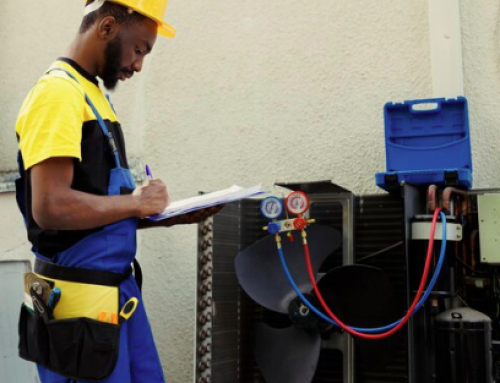
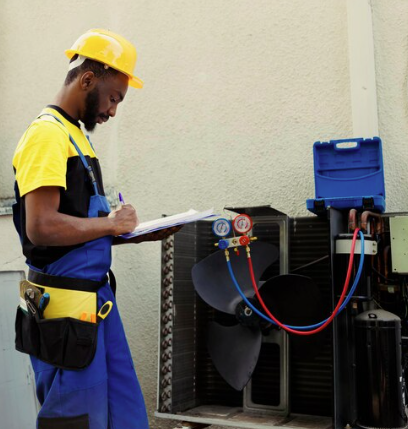
Installation at Lydenberg High School (a project covered by RACA Journal in 2025). Supplied by Derick Gomez
Safety standards and refrigerants
As heat pump uptake grows, safety standards and refrigerant regulations are becoming increasingly critical. Ciprés highlighted the implications of the Kigali Amendment to the Montreal Protocol, which mandates a global phase-down of fluorinated refrigerants. This shift is accelerating the adoption of low-GWP refrigerants, many of which are flammable, placing greater emphasis on compliance with safety standards such as ISO 60335-2-40.
The standard has evolved in recent years to reflect these changes. Updates in 2018 introduced new requirements for systems using hydrocarbon refrigerants, while further revisions in 2022 increased allowable refrigerant charge limits under defined safety conditions, including the use of mechanical ventilation.
One interactive quiz focused on refrigerant charge limits for propane systems using mechanical ventilation. Valerin explained that, under current rules, the maximum allowable charge is 5kg, provided all safety measures are correctly implemented.
The discussion also covered internal heat distribution systems, including air-to-air and water-to-water configurations. Typical operating temperatures were outlined, with air systems generally delivering 35–40°C in heating mode, while water-based systems vary depending on whether they serve radiators, underfloor heating or fan coil units.
Environmental concerns extended beyond refrigerants to include chemical substances such as PFAS (per- and polyfluoroalkyl substances). Ciprés explained that these substances are under increasing scrutiny due to potential health and environmental risks, prompting regulatory proposals in the European Union and elsewhere. Participants were quizzed on which refrigerants may fall under proposed PFAS restrictions, reinforcing the industry’s growing focus on sustainability and compliance.
Market trends and components
From a market perspective, air-to-air heat pumps currently account for around 80% of installed units globally. However, Valerin pointed to a clear shift in Europe, where air-to-water systems are becoming increasingly dominant, particularly in residential retrofits and new builds.
The webinar also explored the core refrigeration components that underpin heat pump performance, including compressors, condensers, expansion valves and four-way valves. Particular attention was given to the role of electronic controllers and the growing use of DC compressors with permanent magnets to improve efficiency.
One audience question addressed the impact of electronic expansion valves compared to traditional thermostatic valves. Valerin outlined several advantages, including more precise superheat control, faster response times and improved energy efficiency. Laboratory and field studies indicate energy savings ranging from 15% to 35%, with some applications achieving up to 40% improvement.
Looking ahead
The session concluded with a discussion on broader industry trends, including digitalisation, demand response strategies, wider operating temperature ranges, noise reduction and improved recyclability. As regulatory pressure intensifies and technology continues to evolve, heat pumps are set to play an increasingly central role in the future of HVAC.
The future of heat pumps will be shaped by market demand, energy constraints and continued innovation. Modular systems, thermal energy storage, improved ground-coupling methods and district- scale applications are all expected to gain traction. Closer integration between heat pumps, solar PV and energy management systems will further enhance their value in South Africa’s energy landscape.
As Industry 4.0 gathers momentum, heat pumps are well positioned to play a central role in delivering smarter and efficient HVAC and water-heating solutions for South Africa’s buildings.
References:
- ASHRAE (https://www.ashrae.org/news/ esociety/a-heat-pumps-role-in-the-fourth- industrial-revolution) – no need to put the whole reference in.
- CAREL: https://www.carel.com/news- detail/-/asset_publisher/FWCUXAoY43Lv/ content/a-carel-webinar-game-on-heat- pumps/10191?utm