By Eamonn Ryan
RACA Journal was on the ground at the Mine Ventilation Society of Southern Africa (MVSSA) 2026 conference, where it was clear from the outset that mine ventilation is no longer just a technical support discipline in the background.

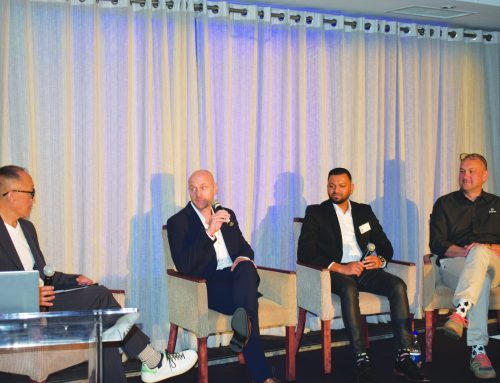
Jaco Venter of Valterra Platinum. All images by © RACA Journal
Ventilation has become one of the central levers for safety, sustainability and productivity in southern African mining.
From the opening session, the tone was set: the mining sector stands at a point of “both opportunity and responsibility”. Technology is advancing at pace, regulations and ESG expectations are tightening, and the health, safety, and wellbeing of the workforce are under sharper scrutiny than ever before.
Over the coming days, delegates were promised deep dives into exposure assessment, monitoring technologies, ventilation optimisation and modelling, emergency systems, explosion prevention, thermal management and professional development.
But these were not to be treated as isolated topics – rather as interconnected pieces of one larger system.
That systems-view ran like a thread through the event, and nowhere more strongly than in the keynote address, delivered by Jaco Venter of Valterra Platinum.
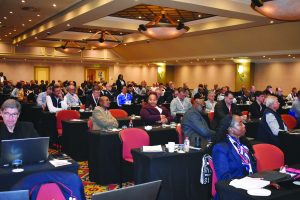
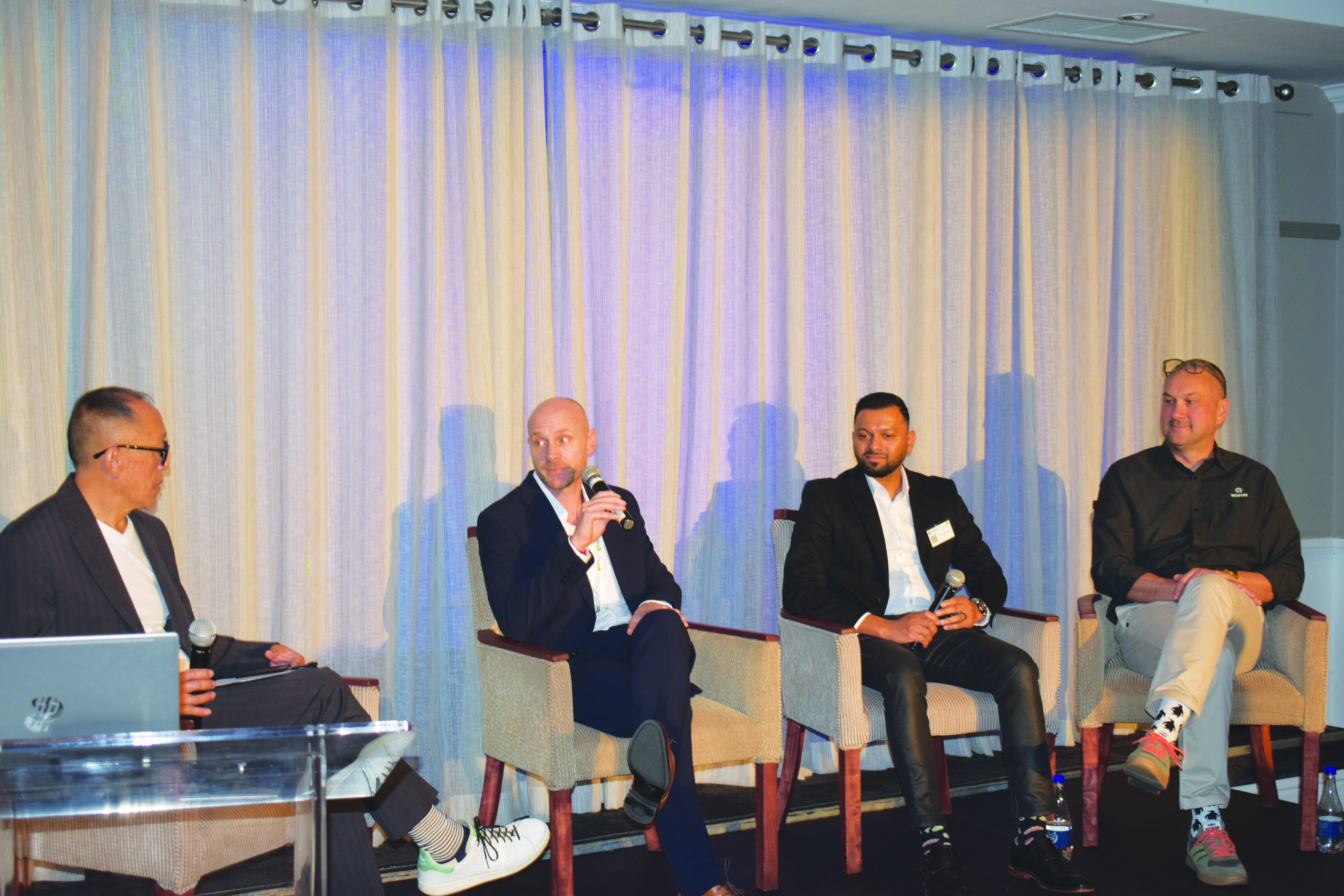
Part of the audience
Picking up on the conference theme of ‘Redefining mine ventilation’, Venter began by asking what, exactly, is being redefined. The core purpose of ventilation, he reminded delegates, has not changed: it is about controlling exposures to airborne pollutants and thermal stress, managing risk and enabling safe, effective production. What must change, he argued, is how ventilation is applied in an increasingly complex, demanding mining environment.
Too often, he suggested, the industry is swept along by buzzwords: AI, automation, real-time digital systems, ventilation on demand. These technologies are not inherently wrong – but they are not automatically right for every mine either. The crucial questions, he said, are simple but often neglected: ‘Will this work on my mine?’ and ‘What real value will it add?’
This is where the South African mining context becomes critical.
Many local operations are still based on long-established narrow reef and bord-and-pillar methods. These systems are highly dispersed and crew-based, with many active faces, complex airflow paths and relatively limited flexibility or dynamic control over where and how air is distributed. Ventilation demand is continuous and difficult to alter, and the layout itself constrains innovation.
Globally, a significant share of production has shifted to bulk mining methods – sublevel caving and other mechanised, highly structured systems. In these environments, production is concentrated into fewer, well-defined zones.
Airflow demand becomes more predictable and controllable, and some areas can remain unventilated until required. This makes them far better suited to dynamic control approaches such as ventilation-on-demand.
In contrast, Venter pointed out, South African mines often cannot accept unventilated headings from a safety and health perspective, and their layouts are simply not designed with VOD in mind. The result is not that technologies like VOD “don’t work” – but that they do not always work here, at least not without rethinking fundamentals and system design.
For Venter, redefining mine ventilation in southern Africa starts with three pillars:
• Strong engineering foundations: Ventilation planning must be fully integrated into the mine’s business planning, both short and long term. Rules of thumb and historical factors are no longer adequate. Demand needs to be defined down to the level of individual sections or connections, giving full visibility of what the mine actually requires to operate safely.
• System performance and control: Good designs on paper are not enough. Systems must be monitored, optimised, and controlled in real conditions, with a clear understanding of airflow patterns and constraints.
• Capabilities and skills: Without the right competencies in place, even sophisticated systems and tools will fail to deliver their promised benefits.
In a particularly pointed comment, Venter argued that a truly mature planning system should be capable of constraining production where ventilation capacity is insufficient – even if this means telling a general manager that certain tonnages cannot be mined safely. This, he suggested, is where integration between ventilation, planning and business decision-making must evolve.
Looking ahead, Venter outlined the approach being developed at Valterra Platinum, which aims to move ventilation management from a static, reactive exercise to a dynamic, proactive one. The strategy brings together:
• A structured ventilation reporting system, replacing fragmented spreadsheets and ad-hoc reports.
• Real-time monitoring, using selected sensors underground to feed accurate, current data into a central platform.
• Continuous network simulation, where a ventilation model runs dynamically using both reported and live data, providing predictive insights into future conditions and potential risks.
By funnelling all of this into a single data hub, the mine gains the ability not only to report what has happened, but to foresee what might happen – and act before conditions deteriorate.
Alongside the conference, a major exhibition reinforced this theme of integration. Exhibitors showcased environmental sensors, monitoring platforms, modelling and simulation tools, cooling and refrigeration technologies, explosion and dust control systems, and digital solutions that tie ventilation into broader mine control architectures. Walking the exhibition floor, it was clear that the technology ecosystem is ready; the challenge now is aligning it with the realities of southern African mining methods and building the skills and systems to use it well.
From RACA Journal’s vantage point, the MVSSA 2026 conference captured a sector in transition: moving beyond slogans and imported solutions, and towards a ventilation philosophy grounded in fit-for-purpose engineering, resilient systems and practical innovation that truly supports safe, sustainable mining in our region.