By Ian MacDonald and Nancy Strangfeld, Atlas Air Conditioning
Buildings do not consume energy on paper; they consume energy in operation.
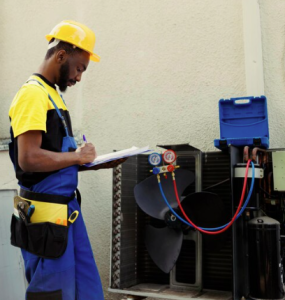
Image Supplied by DC studio
Heating, ventilation and air conditioning (HVAC) systems are major contributors to energy use in commercial buildings, making their design, delivery and ongoing operation critical to overall building performance. As global demand for cooling grows, improving HVAC efficiency remains one of the most effective ways to reduce building energy consumption while maintaining occupant comfort, operational resilience and sustainability.
Modern design tools, intelligent control strategies and increasingly efficient equipment have enabled consulting engineers to develop HVAC systems capable of delivering exceptional performance. Yet many buildings fail to achieve the operational performance anticipated during design. This disconnect between predicted and measured operational performance, commonly referred to as the building performance gap, has become an important focus for researchers and the building services industry. Buildings frequently fail to achieve predicted energy performance despite increasingly sophisticated design methodologies and simulation tools. The challenge therefore extends beyond design to how HVAC systems are delivered, commissioned, operated and maintained throughout their lifecycle.
Energy efficiency is rarely won or lost through a single design decision. Rather, it is the cumulative outcome of hundreds of engineering, construction, commissioning and operational decisions that either protect or gradually erode the performance originally envisioned by the design team. Every successful HVAC project begins with a clearly defined design intent. Consulting engineers evaluate building loads, ventilation, equipment selection, control philosophies, maintainability and future operational requirements to develop systems capable of delivering reliable, efficient performance throughout their operational life. These decisions create the opportunity for energy efficiency; real-world performance depends on protecting that design intent throughout delivery.
As projects move into procurement and construction, practical realities emerge. Congested ceiling voids, structural constraints, programme pressures, co-ordination with other building services and material availability all require informed engineering judgement. Drawings rarely encounter these challenges; construction teams do.
Protecting design intent therefore depends on effective collaboration. Early engagement between consulting engineers, specialist HVAC contractors, manufacturers and project managers allows constructability challenges to be resolved while preserving the original design intent. Likewise, value engineering is not simply cost-cutting. Its purpose is to identify practical alternatives that preserve the functional intent of the design while improving constructability, maintainability, lifecycle cost and operational performance.
Conversely, decisions made without full appreciation of their operational consequences can gradually undermine system performance. Duct leakage, poorly installed insulation, incorrect refrigerant pipework, inaccurate sensors, poorly integrated controls and inappropriate equipment substitutions may each appear relatively minor in isolation. Collectively, however, they can compromise energy efficiency, occupant comfort and longterm operating costs. Commissioning thus provides the critical link between design intent and operational performance.
A SYSTEM THAT RUNS IS NOT NECESSARILY A SYSTEM THAT PERFORMS
Delivering conditioned air or achieving a thermostat setpoint does not confirm that an HVAC system is operating as intended.
ASHRAE defines commissioning as a quality-focused process for enhancing the delivery of a project by verifying and documenting that facilities, systems and assemblies are planned, designed, installed, tested, operated and maintained in accordance with the Owner’s Project Requirements. Effective commissioning confirms that the completed installation performs as intended before entering service and extends well beyond equipment start-up to include testing, adjusting and balancing (TAB), verification of control sequences, sensor and instrumentation verification, functional performance testing and validation under representative operating conditions.
However, protecting design intent does not end at practical completion. HVAC systems rarely become inefficient overnight. Instead, performance typically declines gradually as heat exchangers foul, filters become loaded, refrigerant charge changes, dampers drift out of calibration, sensors lose accuracy, control sequences are overridden and building operating conditions evolve. Individually, these changes may appear insignificant; collectively, they can reduce system efficiency and increase energy consumption without necessarily resulting in an obvious loss of occupant comfort.
For this reason, planned maintenance should be viewed as an extension of the commissioning process rather than as a separate operational activity. Continuous monitoring, optimisation and periodic recommissioning help restore systems to their intended operating condition, extending equipment life, improving reliability and reducing lifecycle operating costs. Numerous studies have demonstrated that recommissioning existing buildings can deliver measurable improvements in energy performance and operational efficiency, often with comparatively modest investment.
As expectations around sustainability, resilience and operational efficiency continue to increase, the industry’s focus must extend beyond designing efficient HVAC systems to consistently delivering and maintaining them. Protecting design intent is not merely a project milestone but a continuous process that begins in design, is verified through commissioning and continues throughout the building’s operational life.
Ultimately, buildings do not achieve energy efficiency through specification alone. They achieve it when consulting engineers, contractors, commissioning specialists, maintenance providers and building owners remain aligned around a common objective: protecting design intent. When that happens, efficient designs become efficient buildings, and predicted performance becomes operational reality.
Atlas Air Conditioning specialises in the installation, commissioning and lifecycle support of commercial and missioncritical HVAC systems across southern Africa.