By Pieter-Jacques Nel (MBA, BEng Mech), Sinclair product manager/HVAC&R mechanical engineer
Sinclair Commercial Solutions, in partnership with Metro Air Conditioning Services, elevate climate comfort at Shoprite and West Pack.

Figure 1: supply stream connected. All images supplied by Sinclair/Metraclark
This article explores how Metro Air Conditioning Services, supported by AOS Consulting Engineers, refurbished retail cooling requirements for Shoprite and West Pack sites in Pretoria with Sinclair CAC solutions – combining engineering excellence, reliable service and insights into best- practice rooftop units.
Introduction
It has been cited that customer performance and satisfaction is not a mere supplementary feature, but rather a strategic driver towards commercial performance. A study cited by Retail Sensing suggests that a mere 1% increase in customer retail dwelling time can lead to an average of 1.3% upliftment in sales. (Retail Sensing, n.d.). Thermal comfort has become an expected retail norm and plays a key role in shaping customer experience and overall satisfaction.
Retail comfort cooling and heating is commonly achieved with the selection of large-scale commercial HVAC rooftop units, and more common for operational floor areas which exceed an area of 250m2, and driven by system reliability, operational resilience and energy efficiency as key selection considerations.
In 2024, Metro Air Conditioning Services, a trusted name in HVAC contracting, selected and commissioned three Sinclair Model SRF280 (280kW) rooftop units (RTUs) for major retail refurbishments in Tshwane, Gauteng: two for Shoprite and one for West Pack.

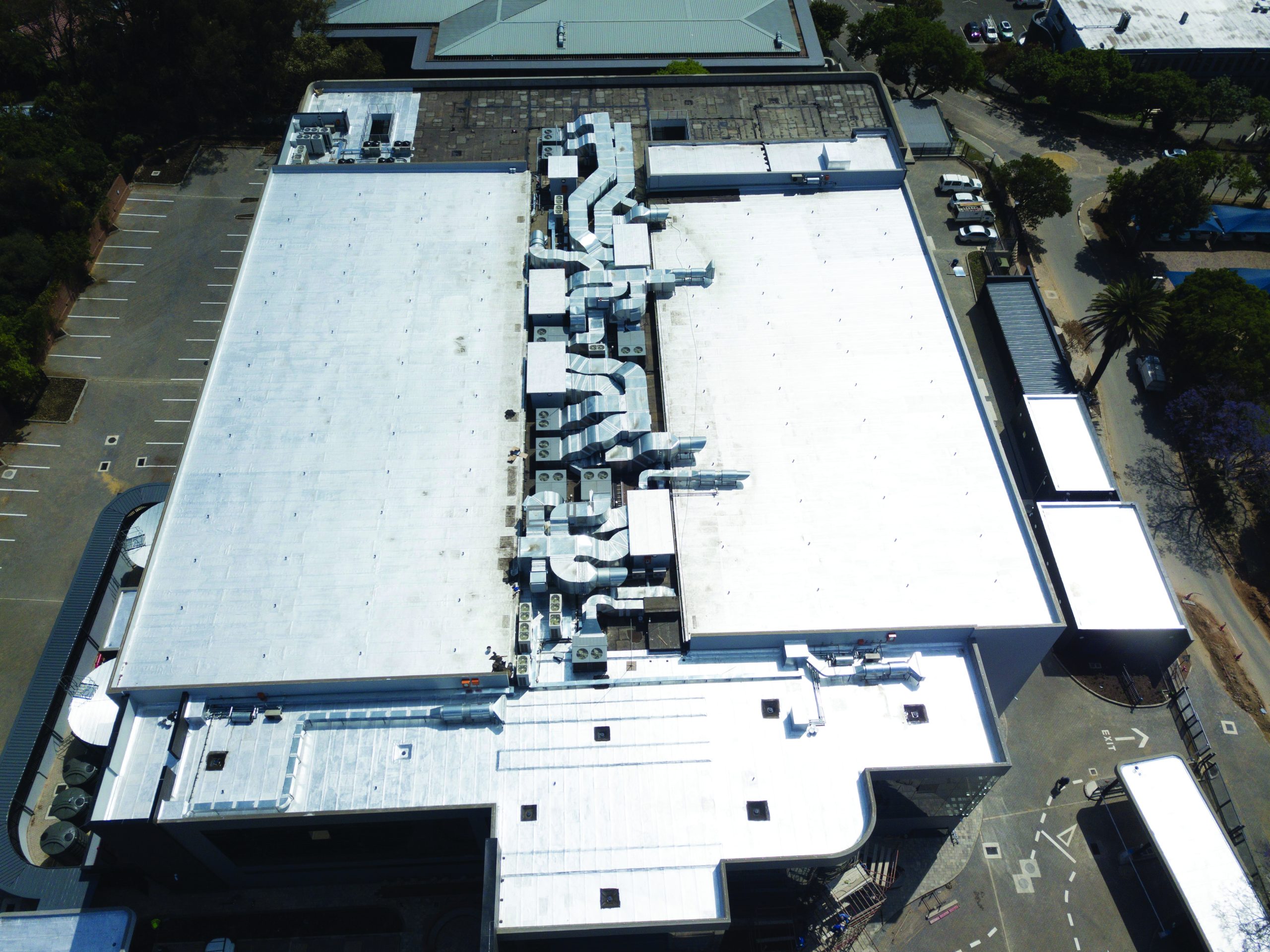
Figure 2: Shoprite plantroom final installation (air-view).
The role of rooftop units in modern retail
Rooftop units offer complete and self-contained solutions (housing critical componentry) which often eliminates complex refrigerant piping layouts, providing a centralised service location which minimises the direct impact effect on retail operations during service intervals. Plantroom locations – which are generally commissioned and distanced from the occupational cooling zone – have the added advantage that internal noise transmissions are minimised with properly insulated ductwork when compared to alternatives. Advancements in step-wise control logic have further cemented the role of rooftop units (RTU) by providing robust and smart digital control platforms to dynamically manage capacity and improve part load performance via staged and precise refrigerant electronic expansion valve (EEV) metering. This ensures accurate superheat control under variable ambient or return air conditions.
Sinclair and SRF RTU range overview
Sinclair is a European brand distributed by Beijer Ref AB in various countries across the globe, offering a key high-quality product for more than 20 years. Metraclark a division of Beijer Ref Africa (the largest air-conditioning and refrigeration wholesaler in southern Africa), gained exclusive distribution rights to Sinclair’s collective portfolio since 2021.
Sinclair offers the SRI inverter range with a maximum cooling capacity on offer of 105kW. The Sinclair SRF range beyond 105kW is, however, only offered in a fixed-speed configuration, ideally offering cooling for large format commercial applications in the capacity range from 140kW – 370kW. The design offers both an integral and split configuration, with the latter offering flexibility for constrained rooftop spaces, supporting a piping distance of up to 40m between evaporator and condenser – should plantroom space serve as a key installation limitation.
Key features include a V-shaped condenser coil utilising internally threaded copper tubing with slotted fins, which enhances heat exchange efficiency while reducing the system’s operational footprint. The coil is further treated with Golden Fin anti-corrosion treatment, tested to withstand up to 1 500 hours of salt spray exposure. Additionally, the unit’s sandwich-structured paneling with PUR core insulation achieves a thermal conductivity of 0.024 W/m°C and airtightness rated at EN 1886 Class TB1, delivering excellent thermal insulation and acoustic dampening.
Complimenting the core unit operations is the precise and rapid load matching response to changing load conditions is achieved via multi-stage compressor control regulations, via adjustments of EEV operations within 500 precision control step bandwidths.

Figure 3: 1/4 Danfoss CH290A4BSA scroll compressors.
Safety, control and comfort features
A major highlight of the Sinclair SRF280 is its robust safety and control system. Multiple layers of protection include high- and low-pressure switches, overcurrent and overload safeguards, phase failure detection, and dry contacts for fire system integration. Efficient comfort is enhanced using large
diameter axial and centrifugal fans, which contribute to lower noise levels while maintaining high airflow efficiency. The embedded electronic expansion valve features 500-step control accuracy modulation, ensuring precise refrigerant regulation. Furthermore, the RTU supports Building Management Services (BMS) integration via BACNET protocol and features touchscreen interface for local operation, including real-time performance monitoring, fault alerts, and maintenance reminders.
Sinclair model SRL technological advances
To further highlight engineering insights behind large-scale rooftop units such as the Sinclair Model SRF range, the following technologies reflect innovations designed towards enhancing thermal performance, energy efficiency, and indoor climate control:
- Uniform cross-flow and two-stage evaporation technology: At full load conditions, superior heat exchange performance is achieved and maintained by incorporating large-finned evaporators in a staggered, yet symmetrical alternating structure towards ensuring uniform performance. At part load conditions, the flow path is altered between evaporator supply paths as part of a rotation cycle. This temperature-based rotation of heat exchange enhances overall system heat transfer and enhances part load efficiencies. Sinclair Model SRF evaporators are engineered to maintain a face velocity between 2.5–3m/s, serving as a fundamental design criterion to be maintained in the application of latter two-stage evaporator coil technology, supporting low- temperature air supply demands while enabling staged dehumidification performance.
- Three-variable co-ordination and precision control technology: Although fixed-speed in operation, the Sinclair Model SRF rooftop unit is engineered for responsive thermal regulation through co-ordinated control of airflow, refrigerant expansion and heat exchange. This three-variable interaction enhances cooling precision and supports stable humidity control, ensuring consistent indoor comfort across varying load conditions. Additionally, the unit incorporates precise air pressure regulation to maintain optimal indoor-outdoor pressure balance. This enables reliable fresh air delivery and improved indoor air quality (IAQ), even in high-traffic retail environments where door cycling and occupancy fluctuations are common.
- Adaptive multi-functional platform design: The Sinclair Model SRF range is built on a modular, scalable platform that allows contractors and consultants to adjust capacity in line with project growth or evolving layout requirements. This flexible architecture simplifies installation and facilitates seamless integration into a variety of commercial applications. To support the design and commissioning process, the system includes a digital pre-configuration tool that streamlines unit selection. During operation, the integrated DDC (Direct Digital Control) platform offers intuitive control, advanced fault diagnostics and compatibility with building automation systems – delivering efficiency across the system’s entire lifecycle.

Figure 4: Ducting model in Revit exploded view.
Project execution by Metro Air Conditioning services
Metro Air Conditioning Services executed the installation of the Sinclair Model SRF280 units with minimal disruption to ongoing retail operations. With a strong portfolio servicing large clients such as Broll, ERIS, RMB, PCC and Shoprite, Metro Air Conditioning’s team conducted extensive site evaluations to ensure structural readiness and co-ordinated the placement of units to maintain architectural harmony. Revit-based duct modeling was employed to optimise airflow distribution and static pressure balancing as per Figure 4. Model generation was pivotal in manufacturing custom ductwork which connected the RTU’s topological supply and return connections to the main supply network.
Table 1 reflects the initial onsite commissioning ESP recorded, illustrating the potential variability introduced by real-world duct design and site-specific layout constraints. This iterates the importance of ensuring that the fan selection is based on the highest-pressure segment of the system. To ensure stable operation and achieve volumetric equilibrium across the supply and return branches, final airside balancing remains critical to achieve optimal indoor environmental control.

Table 1: Initial Commissioning ESP Readings.
AOS Consulting Engineers’ contribution
AOS Consulting Engineers, headquartered in Johannesburg and led by Chris Groenewald for this project, validated the system load calculations and ducting strategy. The design followed best- practice engineering guidelines, including SMACNA duct design standards for pressure loss estimation, and leveraged Revit-based simulations to model airflow under real operating conditions.
AOS confirmed a consistent cooling load estimate of 185W/m² across both retail stores, which guided appropriate equipment selection and duct sizing. Their involvement ensured the system met performance and energy efficiency targets without oversizing, while maintaining airflow delivery aligned with zone- level demands. AOS’s technical oversight and close co-ordination with the contractor played a critical role in achieving a balanced, reliable HVAC installation.

Figure 5: Gold Find Coated condenser segment.
Broader benefits of high-efficiency RTUS
The Sinclair Model SRF280 project illustrates the benefits of adopting energy efficient, multistage-controlled compressor RTUs in large-scale retail. These include significant energy cost savings, improved maintenance accessibility, longer service life due to robust component selection, and the ability to scale and upgrade with changing operational demands. Moreover, the project reflects global HVAC trends where RTUs now offer energy-saving modes, economiser functions and compatibility with solar-ready power systems. Retailers and facility managers should look for features such as corrosion-resistant coating, variable airflow control and smart diagnostics when specifying RTUs for new developments or refurbishments.
Lessons and industry takeaways
For HVAC professionals and stakeholders in South Africa’s retail infrastructure sector, the Sinclair SRF280 case study offers several key lessons. System design must account for not only initial cooling load but future adaptability. Co-ordination among product suppliers, installers and consultants is essential for project success. Utilising BIM tools such as Revit can enhance accuracy in ducting layouts and ESP prediction. Finally, choosing units with intelligent control and safety features can help operators manage maintenance proactively and avoid unplanned downtimes.
The Sinclair Model SRF280 installations across Shoprite and West Pack stores demonstrate how carefully selected equipment, paired with skilled installation and informed consultancy, can deliver reliable, energy-efficient climate control in demanding retail environments. As the South African HVAC sector continues to modernise, projects like these will shape the standards of quality and sustainability expected from market leaders.
Reference
- Retail Sensing (n.d.)The influence of air conditioning on the customer buying experience. Available at: https://eibi.co.uk/the- influence-of-air-conditioning-on-the-customer-buying-experience/ (Accessed: 1 July 2025).