By Eamonn Ryan, with technical input from David Lombard, managing director of Lombard Consulting Engineers and Nicol le Roux, technical director at TOAC.
Stellenbosch University (SU) is undertaking a significant overhaul of its heating, ventilation and air conditioning (HVAC) infrastructure, with a strong emphasis on enhancing energy efficiency and streamlining maintenance procedures.

University of Stellenbosch chilled water pipes. Image by Two Oceans Air Conditioning.
This ambitious project was undertaken by Lombard Consulting Engineers and contractor Two Oceans Air Conditioning (TOAC).
Initiated in late 2018, it centres around the installation of a powerful 6 000-kilowatt chilled water plant with reticulation, designed to serve six buildings within the university’s engineering complex. The project is still ongoing with the full integration of all planned buildings.
The decision to provide air conditioning to buildings that previously lacked it reflects the university’s commitment to maintaining high standards and remaining competitive with other leading institutions. The underlying rationale is to create a more conducive learning environment and align the university’s facilities with contemporary standards. Among older universities it was common practice for secondary lecture halls to be unairconditioned, with some over the years having had air conditioning installed on an ad hoc basis with split wall units and the like.
The initiative was driven by the university’s proactive approach to facility management, responding to the challenges posed by an ageing and increasingly complex HVAC infrastructure. As David Lombard, managing director of Lombard Consulting Engineers – the consultants on the project – explains: “The university’s previous reliance on individual split units and Variable Refrigerant Volume (VRV) systems across its buildings had led to an escalating maintenance burden, particularly concerning refrigerant leaks and the availability of spare parts for older VRV generations. This upgrade to a centralised plant aims to consolidate the HVAC infrastructure, eliminating the need to maintain numerous smaller units dispersed throughout the campus.”
At the heart of the new system lies a high-efficiency chilled water plant featuring state-of-the-art Carrier 19DV water-cooled variable speed centrifugal chillers. These machines boast impressive Coefficients of Performance (COP), reaching up to 6.5 at full load and potentially 13 under optimised part- load conditions with strategic condenser water temperature management. Complementing the chillers are high-performance BAC cooling towers, ensuring efficient heat rejection.

University of Stellenbosch chiller. Image by Two Oceans Air Conditioning.
The system’s design incorporates a large primary loop distributing chilled water to the various buildings, with secondary pumps within each building managing localised distribution. “The supply of key components has been secured through established industry leaders.” Apart from Carrier being the sole provider of the high-efficiency chillers and BAC supplying the cooling towers; Wilo pumps for the system are sourced from Western Cape Pumps.
Notably, the project also incorporated existing Carrier air- cooled chillers, which were only a year and a half old, which were relocated into the main plantroom. One was a heating-cooling machine, and the other and a heating-cooling machine with heat recovery, the latter used to provide hot water and save electricity.
This repurposing for the heating side of the new system demonstrates a commitment to resourcefulness. A sophisticated Building Management System (BMS), provided by SSD Controls oversees both the central plant and the individual building systems. This integrated approach allows for real-time data feedback from the buildings, enabling intelligent optimisation of the central plant’s operation for maximum efficiency.
“A key element in the pursuit of energy efficiency is the inclusion of hot water storage tanks. This innovative feature allows the university to generate and store hot water during off-peak hours, when electricity costs are lower. During peak demand periods in the winter mornings, the system can then utilise this stored hot water, potentially allowing the chillers to be turned off for a significant portion of the day, leading to substantial energy savings. While the full impact of this feature became realised as more buildings were integrated into the system through subsequent phases, the potential for reduced energy consumption is considerable,” explains Lombard. Ultimately, the university may be able to run as much as half the day on the hot water storage, avoiding the peak tariff periods.

University of Stellenbosch heat exchanger. Image by Two Oceans Air Conditioning
Multi-phase rollout defines SU project
The project is being implemented in multiple phases to minimise disruption to university operations. While the chilled water plant and the distribution network to the buildings fall under the scope of this project, the internal HVAC system within each individual building is being managed separately by other engineers, necessitating close collaboration between all involved parties.
Despite the focus on a centralised system, the project has not been without its challenges. Lombard highlights significant space constraints for the new plant room as a primary hurdle. This necessitated multiple design iterations and even a relocation of the plant room after the initial tender process. Furthermore, the sheer size of the equipment and the complexities of interfacing with various stakeholders across different buildings required meticulous planning and coordination.
Beyond energy efficiency and simplified maintenance, Stellenbosch University’s cutting-edge HVAC project incorporates several unique features, including a robust electrical redundancy system and a meticulously planned two-phase implementation on the motor control centres (MCCs).
An important element of the central plant design is its electrical infrastructure. The plant room houses two independent electrical transformers, each feeding a dedicated HVAC MCC. These are interconnected via a bus coupler (a device, typically a circuit breaker, that allows connection between two busbars – electrical power distribution lines – without interrupting the power supply and without creating hazardous arcs), providing a critical layer of redundancy. Should one transformer experience a failure, the system can be manually configured to draw power from the operational transformer to both MCCBs, ensuring continued operation, albeit with potential load shedding of non- essential equipment. This design allows for uninterrupted cooling and heating even during maintenance on one of the transformers or in the event of an electrical fault. As Lombard emphasises, this feature provides significant operational flexibility, allowing maintenance to be performed on one chiller, for instance, while the corresponding transformer is offline.
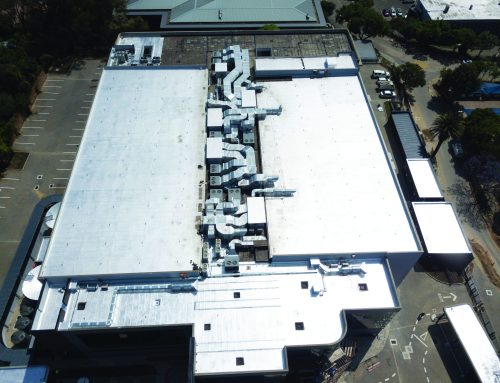
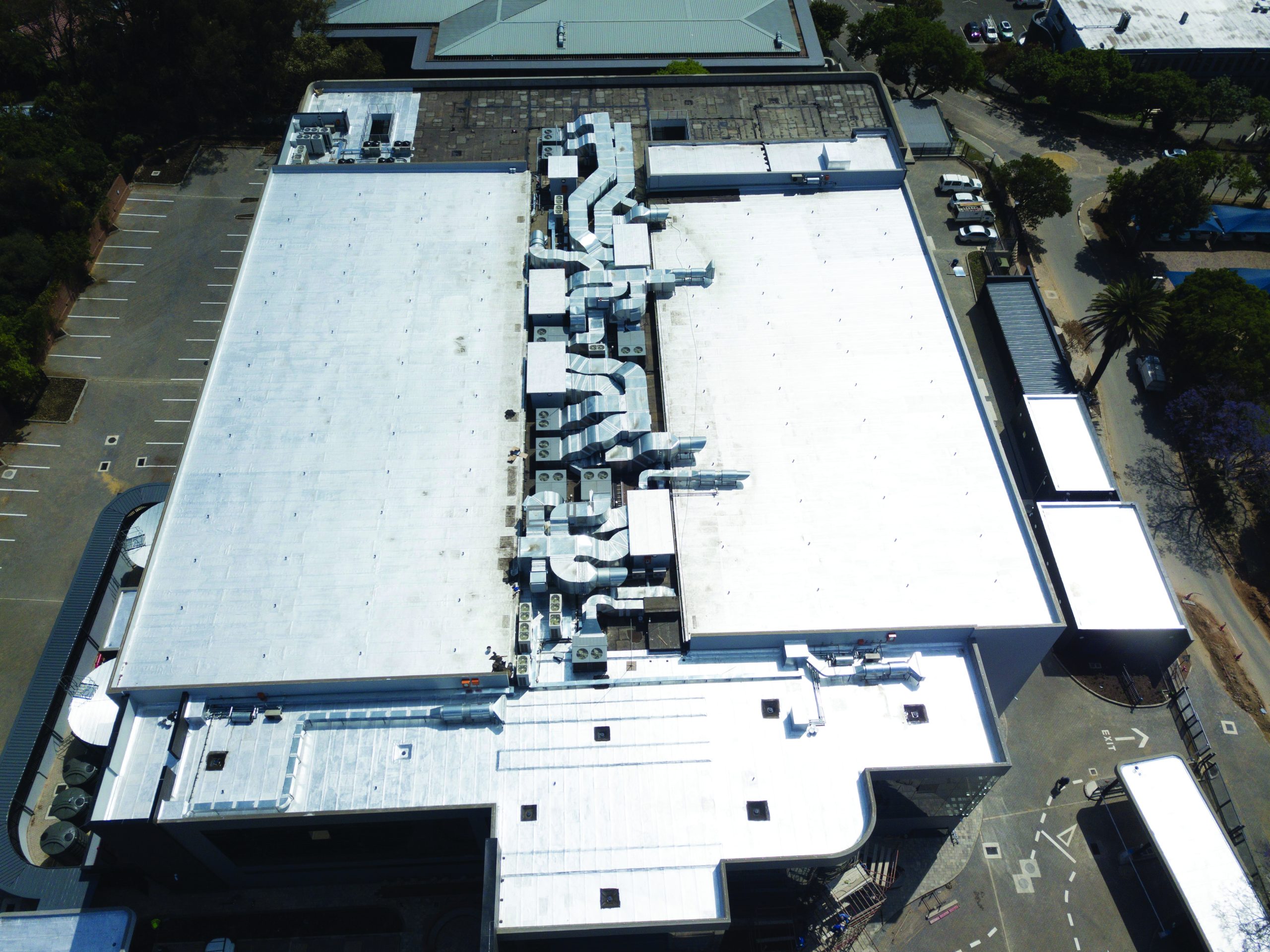
Though the university has embraced solar power initiatives, these are primarily implemented at the individual building level due to space limitations on the central plant’s roof, which accommodates the cooling towers and air-cooled machines. However, the energy efficiency gains from the central plant itself, particularly the hot water storage for winter heating, are substantial contributions to the university’s sustainability goals.
The project’s implementation is strategically divided into two near-identical phases in terms of equipment capacity. This phased approach allows for a gradual integration of buildings onto the new system, aligning with their individual refurbishment or construction timelines. As explained by Nicol le Roux, technical director at TOAC, the first phase involved the installation of one large Carrier 19DV chiller, along with its associated pumps, cooling towers and other necessary accessories. This initial phase successfully brought cooling and heating capabilities to the first two buildings (non- airconditioned) which have been operational now for over a year. These two required complete gutting and redesign.
The second phase, completed in May 2025, mirrors the first phase with the installation of a second large Carrier chiller. This was to enable the connection of the remaining buildings to the central plant. A significant design consideration was ensuring seamless integration between the phases. The engineering team proactively incorporated tee pieces with valves and stoppers in the initial phase, allowing for easy future connections without the need for system shutdowns or extensive modifications to existing pipework.

University of Stellenbosch pumps. Image by Two Oceans Air Conditioning
Until that moment, buildings not yet connected to the central plant continued to utilise their legacy air conditioning systems, which in some cases involved temporary loan chillers due to the earlier failure of older building-integrated units. As the remaining buildings underwent refurbishment and their internal HVAC systems were upgraded, they were progressively connected to the central chilled water and heating hot water loops. Buildings refurbished more recently primarily required the installation of secondary pumps to interface with the new central plant.
The installation phase of a project of this magnitude inevitably presents its own set of challenges. TOAC’s Le Roux highlights the complexities of handling and installing large-diameter (350mm and 400mm) steel piping, requiring specialised welding in confined spaces. The sheer size and weight (14 tons) of the Carrier 19DV chillers also posed significant logistical hurdles in rigging them into the plant room. Adding to these challenges was a minor oversight during the plant room’s initial construction, where a door opening was inadvertently made smaller than specified due to an existing structural beam, requiring careful and time-consuming manipulating of the massive chiller unit. “Much of the equipment was on the roof and had to be carried up three floors – but this is nothing we’re not used to.”
Despite these challenges, the collaborative approach between the consulting engineers and the contractors, coupled with meticulous planning and foresight in the system’s design and phasing, is ensuring the successful implementation of this ambitious and technologically advanced HVAC infrastructure upgrade at Stellenbosch University. The project promises not only enhanced comfort and efficiency but also a more resilient and maintainable system for the future.
Forward-thinking vision drives SU project
Both Lombard and Le Roux emphasise that overcoming logistical hurdles is inherent in projects of this magnitude. As Le Roux points out, the two-megawatt-plus cooling capacity Carrier behemoths are relatively rare in South Africa, with the supplier typically bringing in only one or two such units each year.
Unlike more usual strategies that address HVAC issues on a building-by-building basis, this precinct-wide model demonstrates a commitment to long-term efficiency and standardised comfort across multiple facilities. While termed ‘district cooling’ colloquially, Lombard clarifies that the SU project is more accurately described as a ‘precinct’ cooling and heating system, serving a concentrated area of campus buildings.
In conclusion, Stellenbosch University’s HVAC upgrade is not just a replacement project; it’s a strategic investment in a future- ready infrastructure characterised by high-efficiency technology, robust redundancy and a visionary approach to campus-wide comfort and sustainability. The successful implementation of these massive chillers and the phased integration of buildings mark a significant step forward in the university’s commitment to providing world-class facilities.