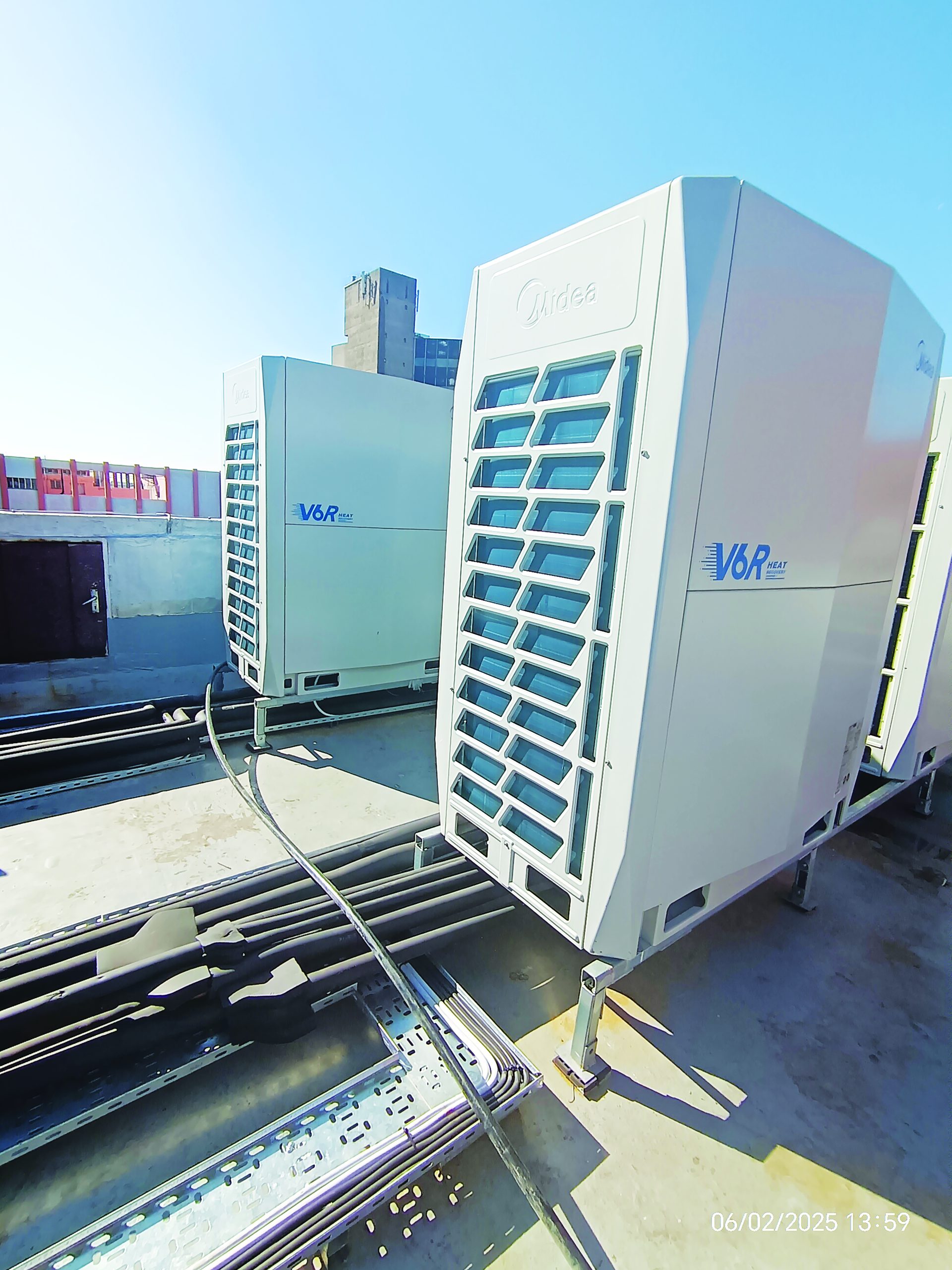
By Eamonn Ryan
HVAC upgrade for the Durban High Court.

© RACA Journal
A historic Durban landmark is undergoing a R1-billion Public Works transformation that blends modern engineering with heritage preservation. The Durban High Court, a 115-year- old structure nestled just outside the CBD, is being completely upgraded as part of a massive Department of Justice (DoJ) project initiated in 2013, with construction commencing in 2021.
For Ganny Govender, managing director of LSG Consulting Engineers Inc., the Durban High Court and Admin Building renovation is more than just another assignment. “It’s an iconic, national key point project – the biggest Public Works project in the country right now,” he says.
The logistical complexity includes relocating court operations and the technical challenge of merging heritage architecture with cutting-edge HVAC design.
Initially designed to be a live upgrade, the project was later modified to decant Durban High Court operations to temporary premises within the Durban Magistrates Court in Somtseu Road. The parking section of the Magistrates Court was transformed into a fully-functioning high court.
The Department of Justice also leased nearby buildings to accommodate its staff, alleviating overcrowding and enabling a more comprehensive upgrade. This logistical shuffle freed up the main building for uninterrupted construction.
Once completed, the entire High Court will reconsolidate into the refurbished main building and the two newly constructed towers, being a New Court and an 11-storey Parking & Admin Building, offering enhanced capacity, technology and climate control. At the heart of the upgrade is a robust, dual-strategy HVAC system that balances technological innovation with site- specific challenges.
The project was originally conceived as a modest upgrade but soon evolved into a full-scale overhaul as the true extent of deterioration and infrastructure limitations became apparent. Today, it’s a flagship government investment, with layered goals: preserve the iconic façade, modernise indoor environmental air quality, and ensure long-term resilience in a corrosive coastal environment.
ebmpapst delivers cutting-edge Radipac EC fan technology to Durban high courtebmpapst has proudly supplied state- of-the-art RadiPac EC fans for the prestigious Durban High Court project, reinforcing its reputation as a global leader in energy-efficient ventilation solutions. This landmark installation demonstrates the company’s commitment to innovation, sustainability and long-term operational reliability in critical infrastructure projects. The Durban High Court, an iconic building with diverse HVAC requirements, demanded a customised solution capable of meeting varying airflow demands across multiple applications. ebmpapst responded with a tailored selection of RadiPac EC fans, ranging from compact 280mm diameter impellers to larger 560mm versions. This wide performance spectrum ensures optimal airflow management, delivering superior comfort and efficiency throughout the facility. All fans proposed and selected were rigorously evaluated to achieve the highest efficiency levels and superior performance. The project’s focus on reliability, energy savings and sustainability aligned perfectly with ebmpapst’s engineering philosophy. By integrating advanced EC motor technology, the RadiPac range provides not only reduced energy consumption but also enhanced durability and quiet operation – critical factors in sensitive environments such as courtrooms. Unique selling points of the radipac ec fans
By combining cutting-edge technology with proven reliability, ebmpapst’s RadiPac EC fans not only meet but exceed the expectations of the Durban High Court project. The solution underscores the company’s reputation for innovation, efficiency and sustainability, while setting a benchmark for modern HVAC applications in landmark buildings. This project highlights ebmpapst’s ongoing mission to deliver intelligent ventilation solutions that reduce energy consumption, minimise environmental impact, and ensure long-term operational resilience. With the Durban High Court installation, ebmpapst continues to demonstrate how advanced fan technology can transform building performance and contribute to a sustainable future. Source: Supplied by ebmpapst |
The need for reliable air conditioning, fresh air integration and CO₂ monitoring was critical. The previous system was plagued by years of underperformance, marked by poor air quality, inadequate ventilation and failing equipment. According to Govender, the design now introduces “backup systems, smart ventilation based on CO₂ levels and true climate control throughout”.
As with many large-scale public projects, funding proved a hurdle. Originally envisioned as a five-year project, the contractor ENZA Construction tried to fast track completion into finishing in four years, however annual budget allocations from government slowed momentum.
“That delayed things, but now we’re back on full steam,” Govender says. Completion is set for May 2026.
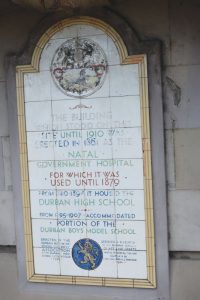
Original plaque. © RACA Journal
A dual HVAC strategy
To reconcile the structural disparity between old and new buildings, LSG implemented a hybrid approach:
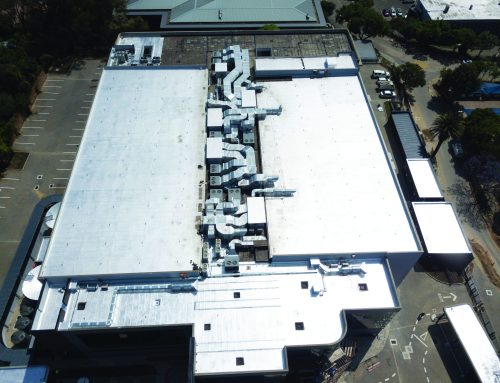
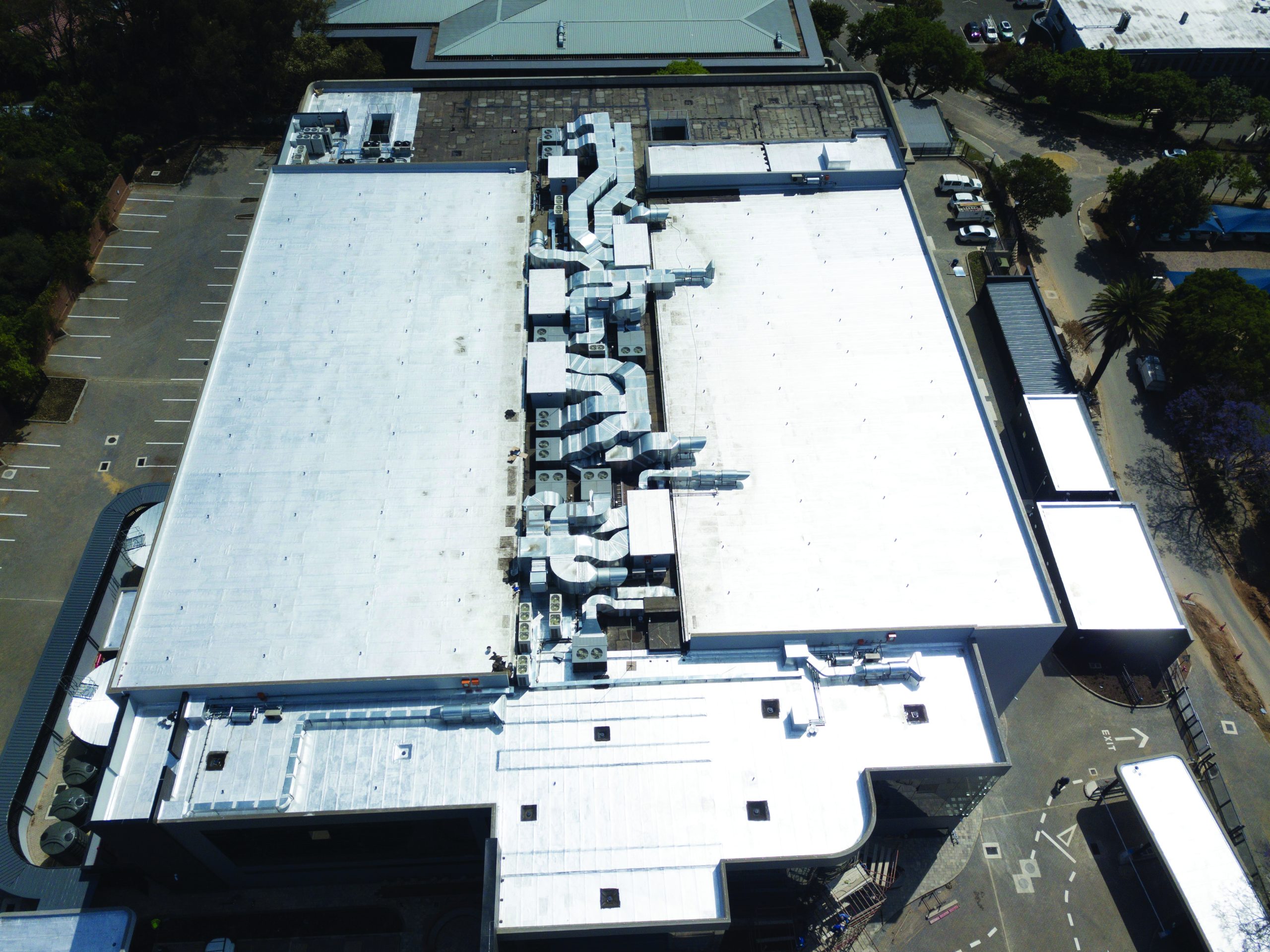
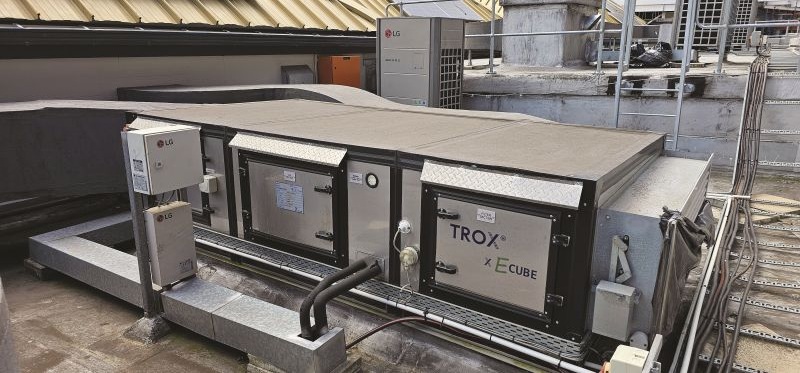
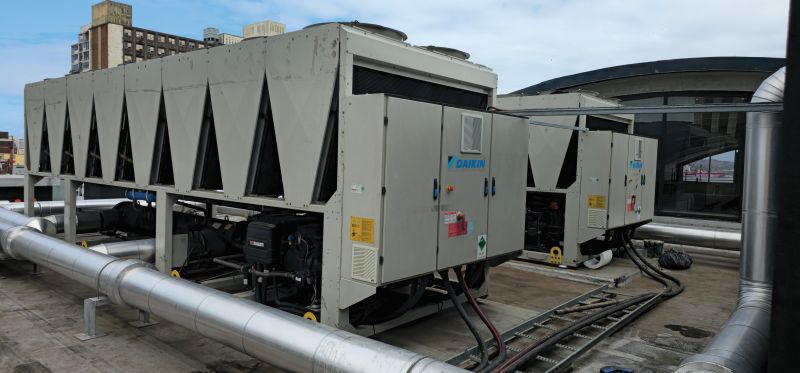
- Chilled-water system: Serving the New Court and Admin Buildings, the rooftop comprises of two Daikin air-cooled chillers that form the beating heart of the system. Daikin was selected due to their superior energy efficiency. These chillers feed a network of insulated pipework that supplies plant rooms on different levels. From here, TROX AHUs provide full-building climate control by delivering conditioned air to judges’ chambers, administrative offices and circulation spaces. This system was chosen for its efficiency, modularity and ability to support high-occupancy spaces.
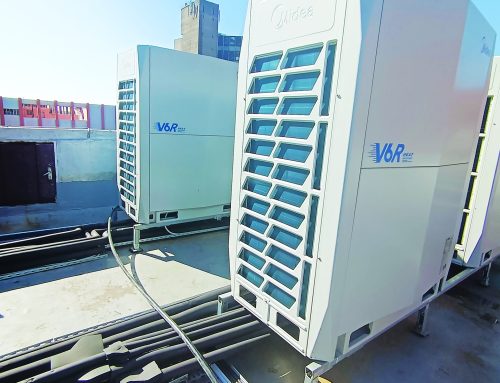
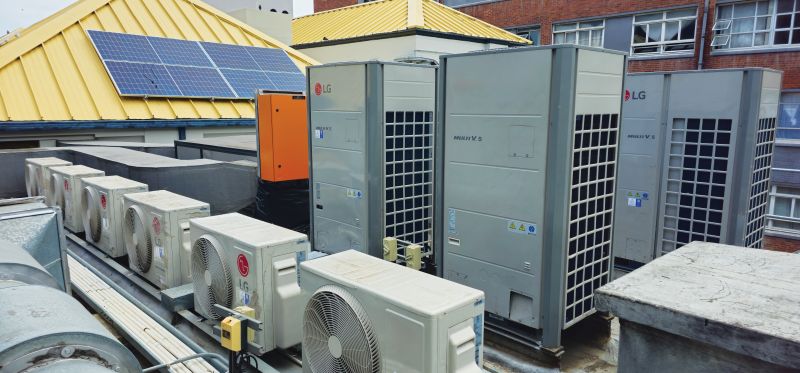
- Hybrid VRF system: For the original 1910 building, large-diameter piping was impossible. Instead, LG VRF condensers, AHUs and FCUs offer flexible zoning and versatile performance. The old building could not accommodate the heavy infrastructure of a chilled-water plant. Independent package units offered a lightweight and less intrusive alternative.
“The old building simply couldn’t support the infrastructure required for a full water plant. With the roof top package and VRF system, we maintained performance while working within tight spatial and load limitations,” explains Govender.
Working with a 115-year-old structure
The High Court sits on reclaimed land, originally Durban’s bay and mangroves. Its plaque tells the story: erected in 1861 as the Natal Government Hospital, repurposed as Durban High School until 1910, then converted into the courthouse. Unsurprisingly, its construction includes outdated methods such as chicken-mesh ceiling slabs and embossed steel downpipes.
Such elements required specialist structural assessment before any HVAC plant could be mounted. Every anchor point was tested for pull-out strength using Hilti engineering tools, with structural engineers verifying substrate strength and signing off approvals.
“You can’t take anything for granted with a 115-year-old building. Every anchor point needed to be tested, which meant working closely with Hilti and submitting full engineering reports,” Govender emphasises.
-
- LG VRF condensers, AHUs and FCUs offer flexible zoning and versatile performance. Image supplied by Airetronic
-
- TROX AHUs provide full-building climate control by delivering conditioned air to judges’ chambers, administrative offices, and circulation spaces. Image supplied by Airetronic
-

- Serving the New Court and Admin Buildings, the rooftop accomodates of two Daikin air-cooled chillers that form the beating heart of the system. Image supplied by Airetronic
Combatting corrosion
Durban’s proximity to the sea posed another major challenge: corrosive salt-laden air and strong coastal winds demanded robust materials. Key equipment, especially those mounted on the roof of the original court building, had to be custom-fabricated in stainless steel.
Mitigation measures Included:
- Stainless-steel bases and panels for exposed equipment
- Factory-treated LG condensers
- Protective coil coatings on AHUs to resist degradation from high fresh-air volumes
- Strategic placement of rooftop units to minimise direct salt exposure
Govender acknowledges that while stainless steel significantly increased upfront costs, it was a long-term investment in durability – preventing early degradation in one of the country’s harshest urban environments.
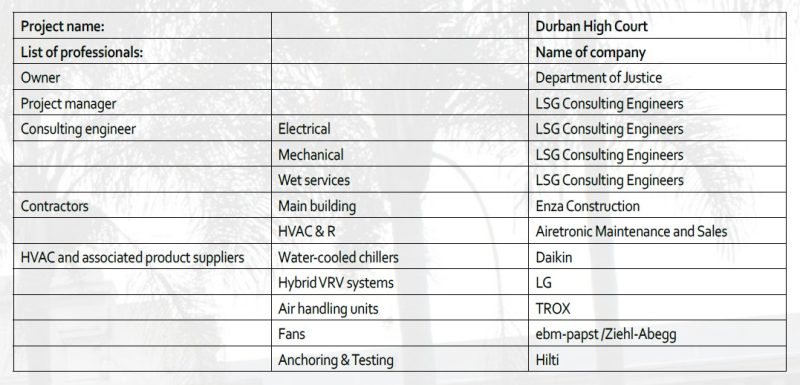
LSG handled the mechanical, electrical, wet services pumps and fire design aspects. The Durban-based firm provided engineering guidance from feasibility to commissioning. Contractor Airetronic worked closely with them to ensure that every HVAC component met structural, performance and regulatory requirements.
-
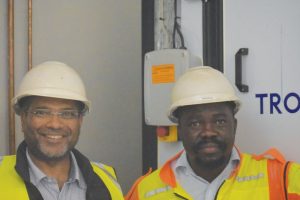
- Tony Moodley, director at Airetronic and supervisor Majola. © RACA Journal
-
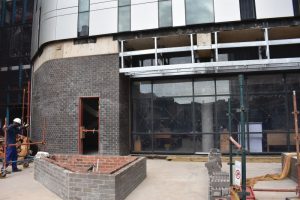
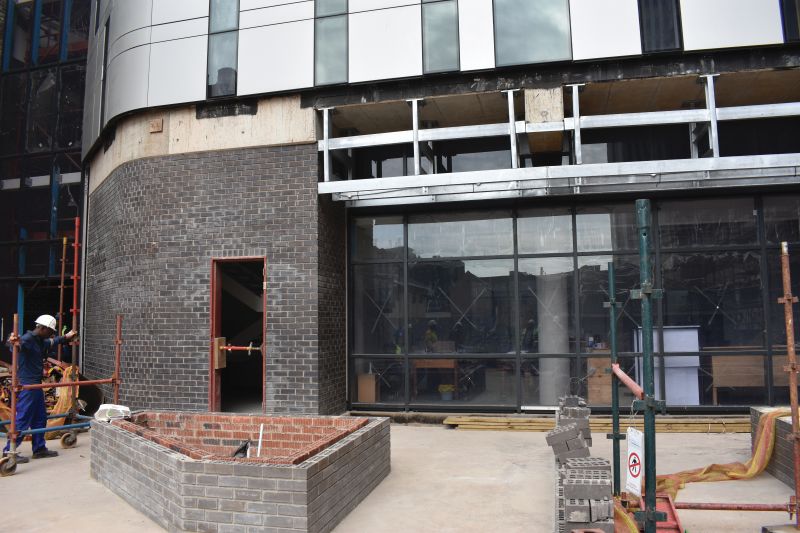
- New section under construction. © RACA Journal

Choosing smarter, greener solutions
Although the project was not registered as a green building, Govender explains that sustainability guided many design choices. The original chilled water system – reliant on cooling towers and prone to water wastage – was replaced with air- cooled chillers, reducing water resource consumption.
“If this had been a green building, we would have achieved maximum points for the decisions we made,” he notes.
Equipment selection was carefully guided by coastal considerations. “Being right next to the harbour, corrosion was a serious issue. We had to upgrade exposed rooftop equipment with stainless steel bases and treated coils, especially for units handling large volumes of fresh air,” Govender notes.
In addition, Tony Moodley, director at Airetronic, says that project progress has not been linear. The site experienced – in addition to the one-year hiatus due to budget alignment issues – disruptions from a ‘business forum’, affecting labour access and productivity. These disruptions strained timelines and forced phases of remedial work, especially where initial installations were interrupted mid-process.
Cooling and heating capacity calculations were developed by LSG, with Govender using Carrier HAP software for load calculations, tailored for high-occupancy courtroom conditions, large volumes of fresh air intake and dynamic CO₂-based demand control. This ensures optimal indoor air quality (IAQ) while maintaining energy efficiency, especially important in public buildings used daily by legal professionals and the general public.
The decision not to use chillers in the heritage structure was deliberate. “The original building couldn’t accommodate the large-bore piping required for a traditional water plant. So, we opted for DX-based VRF systems by LG, which are more flexible and suitable for retrofits,” Govender explains.
For the new structures, Daikin chillers were installed on the roof, along with TROX air handling units, offering scalable, energy-efficient cooling and heating capabilities. All systems include CO₂ monitoring, fresh air regulation and backup systems – prioritising IAQ and operational resilience.
All suspended HVAC equipment underwent load testing and anchor validation using Hilti’s engineering tools and services. Reports were reviewed and approved by structural engineers before work proceeded.
A strong emphasis was placed on local procurement and support for community participation goals (CPG) – a requirement for government-funded projects in South Africa. “We chose TROX for our AHUs partly because they’re local. That aligns with Community Participation Group (CPG) requirements and reduces transport costs significantly,” says Moodley.
However, fulfilling the CPG mandate has proven challenging. “You’re expected to procure 30% of the project value from local or small enterprises. But the biggest costs are material, not labour. So, we’ve had to find creative ways to support smaller contractors.”
Recognising government’s reputation for underfunding maintenance, LSG have included a five-year maintenance plan. After the standard 12-month free guarantee, a structured maintenance contract ensures the systems will be regularly serviced. Public Works may extend the arrangement for another five years thereafter Despite the hurdles, Moodley expressed deep pride in Airetronic’s role. “We’ve worked on many projects, but this one is unique – because of the heritage, the scope, the community engagement and the sheer engineering complexity. “Being able to deliver a sustainable, high-performance HVAC system within such a constrained and sensitive environment is something I am incredibly proud of.