By Eamonn Ryan
In HVAC, AI isn’t just improving operations – it’s rewriting the business model.

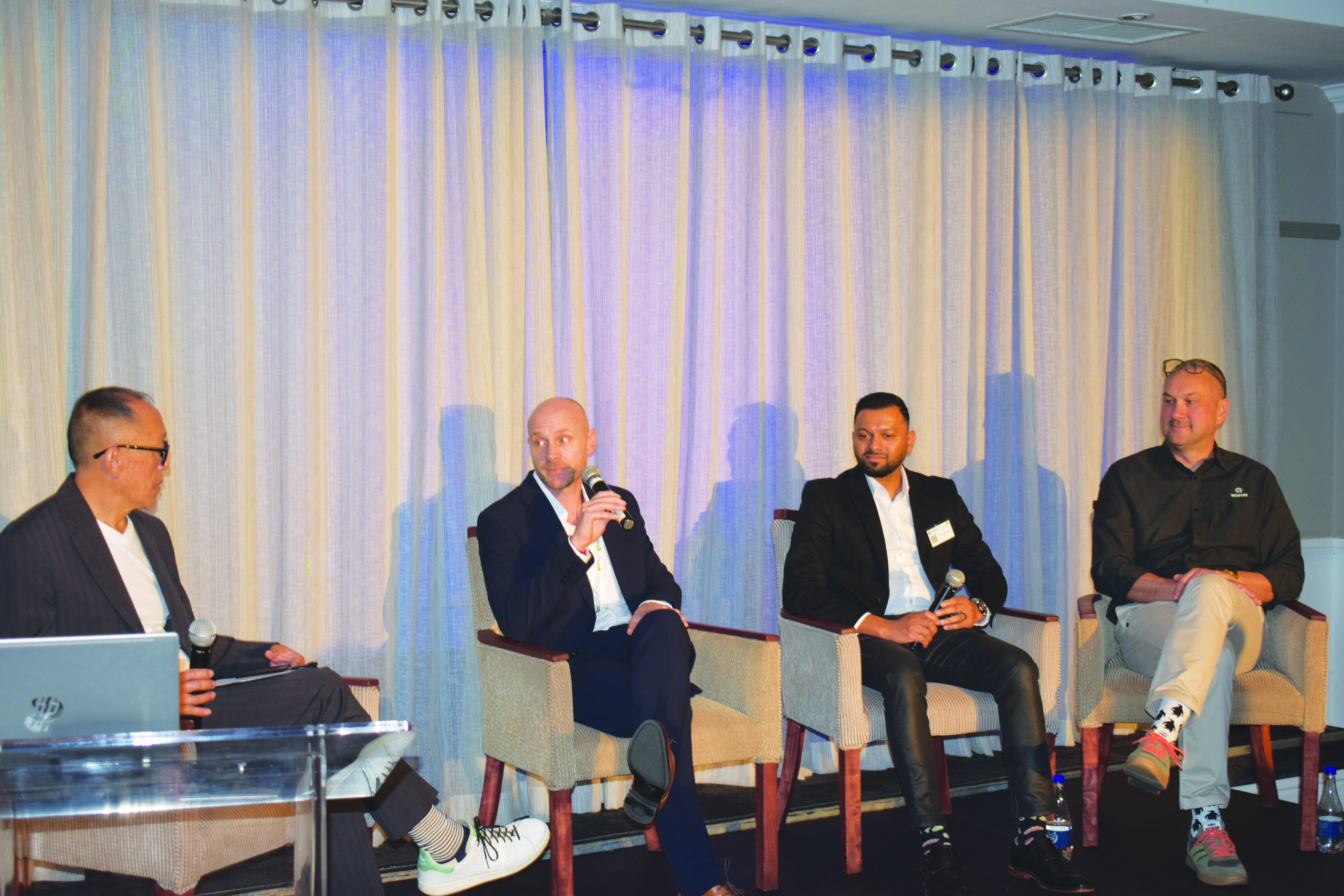
LG Electronics South Africa showcasing its AI-driven Multi VI VRF system and next-generation HVAC controls at the 2025 launch event, highlighting advanced energy efficiency, smart diagnostics, and integrated building management technology. © RACA Journal
Artificial Intelligence (AI) is reshaping industries by automating processes, analysing enormous data sets, and improving decision-making with unprecedented precision. From manufacturing to logistics, the results are consistent: higher efficiency, greater innovation and more intelligent operations.
In the HVAC sector, AI is fast becoming a cornerstone of profitability – transforming how buildings are managed, systems are maintained and customers are served. We asked several industry experts to share how AI can drive profits and redefine value across HVAC operations.
HOW AI IS SUPERCHARGING AFRICA’S COOLING REVOLUTION
AI is rapidly emerging as one of a key force in the HVAC&R sector, redefining how systems are designed, monitored and optimised. Across sub-Saharan Africa – where energy costs, grid instability and limited technical resources present persistent challenges – AI is accelerating a shift toward more intelligent, resilient and efficient cooling and heating infrastructure.
Its impact can be understood in three powerful dimensions.
• First, AI is reshaping predictive maintenance. Machine-learning tools embedded in modern refrigeration and HVAC systems continuously analyse performance patterns, flag anomalies and identify potential failures before they occur. This shift toward anticipatory maintenance reduces costly downtime and enables technicians to intervene early, even across remote or hard-to-reach sites.
• Second, AI enables real-time optimisation. By constantly adjusting system behaviour in response to load changes, occupancy, weather conditions and even live electricity prices, AI-driven controls can dramatically cut energy consumption. In a region burdened with high tariffs and supply constraints, these adaptive efficiencies offer immediate relief to building owners and operators.
• Third, AI unlocks data-driven decision making. With the rapid growth of IoT-connected devices, building managers now have access to granular operational data that was previously impossible to capture. Consumption patterns, refrigeration performance metrics and comparative site data can be analysed and managed remotely, turning data into a strategic asset rather than an operational by-product.
Danfoss is among the companies driving this transition, particularly through its Alsense platform – an AI-enabled, cloud-based ecosystem designed for refrigeration and HVAC operators. Alsense consolidates real-time monitoring, inefficiency detection, remote control, predictive analytics, energy optimisation and multi-site management into a single interface. For operators managing expansive retail networks or cold-chain facilities, this level of visibility and automation represents a step-change in operational resilience.
A glimpse of what full AI integration can achieve is demonstrated by the Danfoss Smart Store in Denmark. This fully functioning supermarket doubles as an application development centre, integrating AI-enabled refrigeration, heat recovery, HVAC, energy storage and even EV charging into one intelligent energy ecosystem.
As electricity costs rise and grid instability persists, energy efficiency is no longer optional. It is becoming a cornerstone of commercial survival. By adapting international best practice – especially AI-enabled European technologies – to African realities, companies aim to support a local transition toward a smarter, more efficient and more sustainable refrigeration and HVAC future.
LG LAUNCHES AI-DRIVEN MULTI VI SYSTEM DESIGNED FOR AFRICAN CONDITIONS
LG Electronics South Africa has taken a decisive step forward in the HVAC industry with the launch of its new Multi VI Variable Refrigerant Flow (VRF) system – a fully AI-integrated solution designed to maximise performance, energy efficiency and reliability under Africa’s unique climatic conditions.
The launch event in October 2025 gathered key industry players, contractors and distributors for an immersive.
introduction to LG’s latest technologies. The day featured product demonstrations and presentations from the company’s leadership team, all aimed at showcasing how LG’s HVAC solutions are evolving to meet the growing demand for intelligent, sustainable air-conditioning systems across southern Africa.
Opening the proceedings, Patrick Jung, product director for LG Energy South Africa, introduced the company’s new product portfolio. Jung, from Korea, has been based in South Africa for over two years, overseeing the rollout of LG’s latest energy and HVAC technologies into the local market.
“I’m responsible for bringing any product South Africa needs – organising, adapting and localising it for our market. Today is about introducing some of our latest innovations, from the new rooftop package unit and new air-colled Inverter Scroll chiller, and of course, the Multi Vi system,” he said.
His introduction set the stage for a day that balanced technical depth with practical insight into LG’s engineering philosophy – one that prioritises efficiency, durability and regional relevance.
AI-LED HVAC: A SMARTER WAY TO COOL AND HEAT
The centrepiece of the launch was the presentation by Andries Bekker, Eco Solutions general manager at LG Electronics South Africa, who unveiled the Multi VI – the sixth generation in LG’s Multi V line, now enhanced with advanced artificial intelligence.
Bekker, who has spent a decade with LG in both technical and managerial capacities, described the Multi VI as a milestone in the company’s evolution. “The Multi Vi is more than an upgrade. It represents a new way of thinking about HVAC – where systems can learn, predict and adapt automatically to their environment,” he said
At its core is the AI Engine, a self-learning control system that continuously monitors environmental conditions, occupancy patterns and weather forecasts to optimise performance in real time. “With AI SmartCare, the system analyses external weather data and internal load variations, and automatically fine-tunes operation. This means no wasted energy, reduced wear on components, and consistent indoor comfort – all achieved without human intervention,” explained Bekker.
The AI Management function also enables self-learning group settings. In a space with multiple indoor units, the system identifies which areas face higher thermal loads – for instance, sun-exposed façades – and redistributes cooling or heating capacity accordingly.
BUILT FOR THE CONTINENT’S CLIMATES
Bekker was quick to address a common industry concern – that high-end HVAC systems are often not designed for Africa’s diverse climatic conditions. “This product has been tested right here in South Africa for a full year. We wanted to ensure it performs as efficiently in Durban’s humidity as it does in Johannesburg’s winter mornings,” he said.
The Multi Vi achieves its performance gains through several engineering enhancements. It offers capacities of up to 26 horsepower per unit, scalable to 96 horsepower when linked in a four-unit combination. A new three-circuit heat exchanger and upgraded defrost technology allow faster and more effective defrosting, particularly valuable in regions with wide temperature fluctuations. Despite being slightly larger in size than the Multi V5, the new model is lighter in weight and delivers a higher energy efficiency ratio (EER).
Operating ranges have also expanded: cooling from -15°C to 52°C and heating from -30°C to 18°C ambient conditions. These wide operating limits ensure reliability across South Africa’s varied geography: from coastal installations to elevated inland sites.
All outdoor units now feature LG’s proprietary Black Fin coating, which protects coils, panels and fasteners from corrosion. This anti-corrosive finish is standard, not optional, making the units particularly suited to coastal and industrial environments.
INTEGRATED SMART DIAGNOSTICS AND CONTROL
Serviceability has also been improved. The AI Smart Diagnosis function analyses system performance data instantly, identifying potential issues before they cause downtime. “What used to take an hour of on-site testing can now be done in minutes,” Bekker noted.
The Multi Vi connects seamlessly to LG’s AC Smart 5 controller, which allows facility managers and technicians to monitor, control and adjust parameters remotely. The system supports Wi-Fi connectivity, eliminating the need for hardwired connections, and includes a built-in black box function that stores up to six months of operating history. This makes fault tracing simpler and more accurate.
Environmental responsibility remains a key focus. The Multi Vi is fully compatible with R32 refrigerant, which has a significantly lower global warming potential (GWP) than traditional refrigerants. The system also integrates with LG’s Hydro Kit for heat recovery, enabling waste heat from cooling operations to be used for domestic hot water, underfloor heating or pool heating – reducing both operational cost and carbon footprint
To meet evolving safety standards, the Multi Vi introduces an enhanced refrigerant leakage detection and mitigation system. Depending on configuration, the system can automatically shut down affected indoor units, isolate circuits using third-party actuators, or deactivate the entire outdoor unit if required. This feature, Bekker noted, aligns with new regulatory requirements emerging in markets such as Botswana, where hotel projects increasingly demand built-in refrigerant leak safety controls.
PERFORMANCE THAT PAYS FOR ITSELF
While AI integration inevitably raises initial equipment costs, LG’s testing indicates that the investment pays back rapidly through energy savings. Based on regional field data, the Multi Vi achieved an ROI within six months in Durban, seven months in Cape Town and eight months in Johannesburg.
“This is not theoretical modelling. These are real installations we’ve monitored, proving that energy savings translate directly into financial returns,” said Bekker.
The launch also introduced LG’s AC Smart 5 control system – the heart of its intelligent building management ecosystem. The platform enables remote access to system diagnostics, load balancing and energy tracking. It supports BACnet and Modbus protocols, allowing seamless integration with third-party building management systems (BMS).
For contractors and facilities managers, the ability to monitor CO₂ sensors, fans and external equipment through LG’s platform simplifies commissioning and long-term maintenance. “Everything can be controlled from one point – it’s a fully connected environment,” he added.
“True innovation is not about adding complexity – it’s about creating comfort, efficiency and reliability through intelligence. With Multi Vi, we’re giving our customers exactly that: a system that thinks for itself and performs for them,” said Bekker.
LG SHOWCASES NEXT-GENERATION INVERTER ROOFTOP PACKAGE UNITS
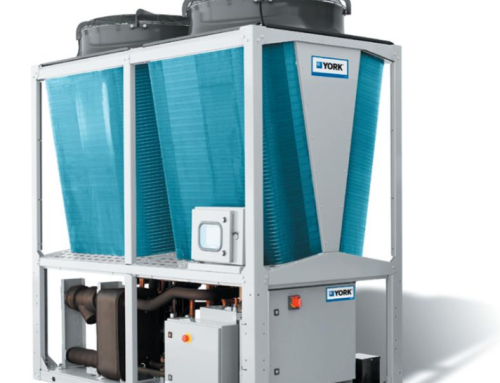
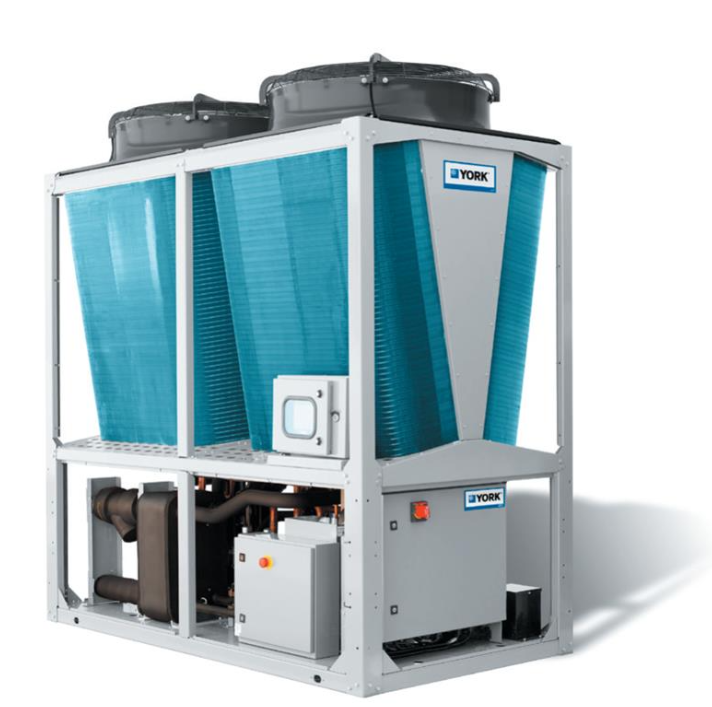
LG also unveiled its latest generation of rooftop package units, engineered to deliver advanced inverter technology, superior energy efficiency and high durability tailored for South African operating conditions.
The new LG rooftop units are available in capacities ranging from 90 000 to 300 000 BTU, each featuring inverter-driven compressors. Unlike conventional on/off systems, inverter compressors automatically adjust their speed to match the building’s real-time cooling or heating demand. This allows for stable indoor temperatures, reduced mechanical stress, and significant energy savings.
Under comparable conditions, traditional systems consume around 21.83kW, while LG’s inverter units require as little as 12.07kW. A field case in Cape Town demonstrated a reduction of 18.14kW, underscoring both the financial and environmental benefits of the technology.
The design prioritises efficiency, reliability and ease of maintenance. The units employ brushless DC fan motors with a direct drive fan system, eliminating belts that typically require periodic adjustment and cause energy losses. This configuration enhances performance while lowering maintenance costs.
Each fan connects to its own PCB control board, allowing precise speed modulation and optimised airflow. Dual temperature sensors – monitoring both indoor and outdoor air – ensure that the unit maintains comfort without wasting energy.
Maintenance efficiency is built in: slide-out air filters are easy to access and clean, enabling technicians to complete service tasks quickly and safely. Designed with local challenges in mind, the units include built-in voltage protection to guard against power surges and load-shedding fluctuations – a crucial feature for South Africa’s variable grid conditions.
Up to 16 indoor systems can be connected to a single interface, allowing users to manage temperature setpoints, lock individual zones and schedule operation across 24-hour or seven-day cycles. These intelligent controls enhance flexibility, comfort and energy optimisation.
© RACA Journal