Compiled by Eamonn Ryan
Smart EC fan technology optimises IAQ, efficiency and sustainability.
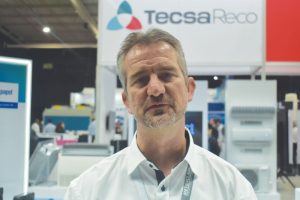
Francois Schoombie, technical and operational director, ebm-papst. © RACA Journal
Indoor air quality (IAQ) has never been a static concept. From humanity’s first encounter with fire to today’s debates over ventilation standards, IAQ has reflected a persistent tension between comfort – what occupants can smell or tolerate – and health, what actually harms them over time. As Max Sherman argues in ‘IAQ Paradigms – The Next Generation’, the field is now at the threshold of another major paradigm shift, one that reframes ventilation not around odours or compliance, but around quantifiable harm.
Lessons from the pandemic
The COVID-19 pandemic reinforced the importance of ventilation and filtration in public health. ASHRAE’s work during this period informed Guideline 42, integrating more research on outdoor
air management, demand-controlled ventilation (DCV), and filtration for infectious aerosol control. The guideline helps practitioners apply lessons learned – such as verifying outside air rates, monitoring damper performance, and ensuring that DCV systems are correctly used and maintained.
Guideline 42 addresses several real-world operational challenges that extend beyond simply meeting design standards:
- Humidity control: Proper humidity management prevents mould growth, protects materials, and enhances comfort – particularly in humid or tropical regions.
- Building operation: Maintaining appropriate ventilation and pressurisation during periods of low occupancy prevents deterioration of air quality and costly remediation.
- Demand-controlled ventilation: The guideline clarifies the role of CO₂ sensors in DCV systems. While CO₂ is a useful indicator of occupancy, it is not the sole measure of IAQ. Effective systems integrate multiple sensor inputs to optimise airflow and maintain air quality.
Ultimately, Guideline 42 complements Standard 62.1 by translating IAQ science into practical, actionable measures. It offers a living framework that will evolve as new research and technologies emerge, particularly in the areas of filtration, sensor integration and advanced control systems.
For designers, building operators and facility managers, it represents a roadmap for achieving cleaner, healthier, and more resilient indoor air – an increasingly vital goal in every ventilation and filtration strategy.
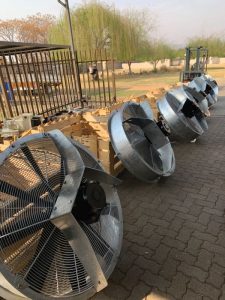
Stock at Multi-Wing South Africa. © RACA Journal
Advanced fan technology and the future of IAQ
By Francois Schoombie, technical and operational director, ebm-papst
Most ventilation systems are static in control philosophy or are not speed-controlled at all. EC technology makes integration into Building Management Systems (BMS) and speed control easy, thereby ensuring accurate Indoor Air Quality (IAQ), with actual operating parameters and ventilation rates fed back to the BMS or control system.
As a fan supplier, ebm-papst products are developed and tested according to applicable country and/or legislative performance standards in our own accredited laboratories and test chambers, situated at our various manufacturing facilities. When we provide turnkey solutions (not components only) to customers, our approach is governed by our motto, ‘Engineering a better life’.This reflects\ our commitment to sustainable and intelligent solutions for a better climate – for people, their applications and our environment.
From a performance and control perspective, there is no such thing as a ‘free lunch’ in ventilation. If IAQ can be achieved and maintained purely by natural ventilation, this will always be the most sustainable solution. However, from a fan manufacturer’s point of view, the combination of both natural and mechanical ventilation should be considered rather than one or the other. The determining factor is whether such a hybrid system is considered and incorporated from the initial design and inception of a project or building.
There are many application-specific examples where ebm-papst fans have enabled hybrid ventilation strategies that combine natural airing with mechanically controlled airflow to optimise comfort, energy use and pollutant removal. These examples are documented in our case studies and white papers, which are subdivided into different strategic business fields used to categorise our air technology products and solutions.
Ventilation standards such as ASHRAE 62.1 and 62.2 clearly quantify the required fan performance characteristics. Selecting the most appropriate control strategy, however, depends on the specific application. To optimise this strategy, the control systems should be integrated into a higher level BMS or cloud solution. This is only possible when the actual performance characteristics of the fan can be fed back into the system. Balancing energy use and occupant comfort requires a closed-loop control system that both actively and dynamically adjusts fan characteristics according to actual real-world conditions. Static or open loop control systems cannot achieve this. With the utilisation of our NEXAIRA system we can control, record and prove compliance of Indoor AirTargets (IAT) to the RESET Standard or other required standards.
Among the most common challenges or misconceptions encountered when designers apply ventilation rate standards in real-world systems is that design standards and human perception inherently rely on worst-case scenarios and/or conditions. Ventilation rates are accordingly based on the highest requirements. Many times, actual real-world requirements in the application are lower. Using EC technology and closed-loop control systems, fan performance can be matched to exact requirements rather than overperforming to meet static design requirements and/or standards.
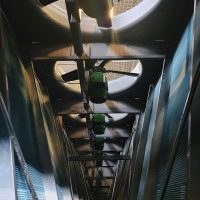
Multi-Wing impellers used in an adiabatic cooler. Supplied by Multi-Wing
Its products are used widely in air handling units, and selecting the right fan type – whether axial or centrifugal depends on many factors. These are governed by the specific application and surrounding requirements. Our approach is to consider the lowest energy consumption in the actual duty point, while complying with said requirements and applicable standards. This can be a daunting task given the number of variables to consider, which is why FanScout, our online fan selection tool, makes this task a breeze.
Fan selection becomes even more critical when systems incorporate high-efficiency filtration such as MERV, HEPA or ULPA filters. These filters introduce significant pressure losses, particularly as they load over time. For the best possible solution, one should consider the actual on-site operating and performance characteristics throughout the life cycle and stages of the fan. High-efficiency filters have a high change- out pressure; the fan(s) need to be able to deliver the required performance at these pressures. Most of the actual operating conditions of the system over its lifespan occur at lower pressures. Utilising EC technology and closed-loop control systems is the only way to balance efficiency with requirements and associated fan performance.
When advising engineers on applications such as cleanroom fan filter units (FFUs), the key message is that ‘less is not more’. The fan and filter system should be made smart. Turning ventilation digital allows performance to be actively adjusted to meet real-world dynamic conditions. The lowest-cost solution is not the most sustainable. Consider the life-cycle cost and total cost of ownership from the end user’s perspective.
Filter performance inevitably degrades over time, and fan manufacturers can play a significant role in improving maintenance strategies through predictive monitoring and integrated feedback. This approach aligns directly with ebm-papst’s 2030 strategic goals of converting ventilation to digital and realising a net zero emissions strategy. Through NEXAIRA, we provide solutions on component, application and system level, thereby achieving 15–20% annual savings on total cost of ownership in commercial buildings. As a solutions supplier rather than a fan supplier only, we can also support fan retrofits, eliminating the need to replace entire plant or systems.
When developing next-generation fans, sustainability KPIs such as lifecycle energy use, noise, recyclability and many others, are all considered. The distinction between being a product-only or component-only supplier and being a solutions-provider has a profound impact on how sustainability is approached.
Governed by our ‘Engineering a better life’, we make sustainable and intelligent solutions for a better climate – for people, their applications and environment. Through our ‘glocal’ approach, combining global expertise with strong local presence, we stay close to our customers, gain a deeper understanding of their requirements, and deliver solutions that truly match their needs.
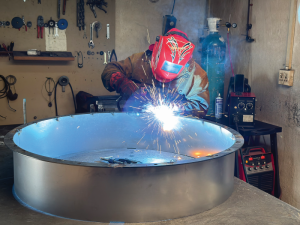
Manufacturing axial fan used for transformer cooling. Supplied by Multi-Wing
Closing the gap between ventilation design and real-world performance
Despite the sophistication of modern HVAC design and ventilation standards, buildings often fail to operate as intended. In ASHRAE Journal podcast episode 23, Andrew Persily, Ph.D, Fellow and Life Member ASHRAE of NIST; and engineer Meghan McNulty, P.E. and ASHRAE member explore the disconnect between design intent and real-world ventilation performance, emphasising the importance of operations, maintenance and occupant-focused assessment.
Field measurements frequently show that actual ventilation rates diverge significantly from design values. In many existing buildings, confirming compliance with ASHRAE Standard 62.1 reveals inconsistent or poorly performing systems. Over time, minimum ventilation standards have often been treated as performance targets rather than baselines for improved IAQ.
Operational reality is a major factor. Systems are frequently modified, poorly documented or improperly maintained. Shared air intakes, misaligned dampers and undocumented tenant alterations can all compromise ventilation effectiveness. As McNulty notes, the first step is often simply understanding what systems are actually in place.
Research, including large field studies of office buildings, has shown that many buildings operate below their intended outdoor air rates. However, simple operational and maintenance interventions – such as verifying damper positions, correcting duct connections and ensuring proper outdoor air delivery – can restore performance without major capital upgrades. In fact, a large proportion of buildings can meet minimum ventilation requirements through basic O&M improvements alone.
CO₂ monitoring can provide useful insights into ventilation effectiveness, but readings must be interpreted carefully, taking into account occupancy, timing and space characteristics.
The key takeaway is: good ventilation is not achieved through design alone. It requires ongoing verification, operational understanding and maintenance. Bridging the gap between design intent and real-world performance remains one of the most important challenges – and opportunities – in improving IAQ.
Podcast episode 23 highlights the critical need to bridge the gap between ventilation design and real-world performance. From historical standards to pandemic-driven awareness, Persily and McNulty underscore that achieving effective ventilation requires operational insight, occupant-focused assessment and practical maintenance strategies. Good ventilation is not just a design specification – it is a dynamic system that must be continually assessed and managed to ensure healthy, comfortable and energy-efficient indoor environments.
Understanding the fundamentals of HVAC filtration
Speaking on Hot Air, an ASHRAE podcast series, Kathleen Owen looked at the essential science, practical considerations and trade-offs involved in air filtration.
Owen is a consulting engineer with nearly 40 years working in IAQ and air cleaner testing. She also previously served as chair of ASHRAE Standard 52.2, which defines the MERV (Minimum Efficiency Reporting Value) rating system used throughout the industry.
“One of the most common misconceptions about particle filters is that they work like simple sieves: particles larger than the holes get trapped, and smaller particles pass through. While that idea seems logical, it does not reflect how filters actually function,” says Owen.
She explains that in reality, particle filters rely on several capture mechanisms – including interception, impaction, diffusion and electrostatic attraction. These mechanisms explain why filters can effectively capture particles that are much smaller than the apparent spacing between fibres, and why certain particle sizes – particularly those in the 0.1 to 0.3 micron range – are more challenging to capture than both larger and smaller particles.
Understanding these mechanisms helps explain why higher- efficiency filters behave differently from lower-efficiency ones, and why performance cannot be judged simply by appearance.
Bypass air: a small gap with big consequences
Another key topic addressed in a paper that Owen co-authored is bypass air, or air that leaks around the filter instead of passing through it. Even small gaps between the filter and its housing can significantly reduce filtration effectiveness.
“This issue becomes more pronounced as filter efficiency increases. Higher-efficiency filters, such as HEPA or high- MERV filters, create greater resistance to airflow. As resistance increases, air naturally seeks the path of least resistance, which often means flowing around the filter rather than through it if any bypass paths exist. Proper filter installation and sealing are therefore just as important as selecting the right filter.
“ASHRAE Standard 52.2 provides the MERV rating system, which is widely used to compare filter efficiency. While higher MERV ratings generally mean better particle removal, selecting the highest possible MERV is not always the best solution,” she says.
Higher-efficiency filters can increase pressure drop, reduce airflow and raise energy consumption if the HVAC system is not designed to accommodate them. In some cases, upgrading a filter without evaluating system capability can lead to unintended consequences that negatively affect building performance.
Filtration can seem either overly simplistic or unnecessarily mysterious. Some assume that simply installing a filter – loosely or otherwise – is sufficient. Others are confused by why small leaks matter, why HEPA filters behave differently from lower- efficiency filters, or why energy and airflow considerations are so closely tied to filtration choices.
By understanding how filters actually capture particles, why installation details matter and how efficiency choices affect overall system performance, readers can move beyond guesswork and toward effective, evidence-based IAQ solutions.
Multi-Wing South Africa: custom fan solutions powering the industrial cooling sector
By Eamonn Ryan
Rooted in decades of industrial fan expertise, Multi-Wing South Africa has evolved from a local distributor into a regional innovator.
Under the leadership of father-son duo Clinton and Kevin Jones, the company blends modular Danish design with local precision manufacturing to deliver high-performance axial fans purpose built for harsh environments. With plans to expand its distribution network across southern Africa, Multi- Wing continues to strengthen its reputation for engineering excellence, reliability and service in the industrial cooling and HVAC&R sectors.
Kevin Jones explains: “With 40 years of experience in the industrial fan sector my late grandfather, Marthin Naudé, established the Fan-Masters group in Cape Town in 1996 to meet the growing demand for high-performance custom ventilation solutions in the region. In 2001, the head office moved to Johannesburg to improve service delivery within the industrial hub of Africa, allowing for more direct engagement with key clients in the industrial cooling sector. In 2008 we officially rebranded as Multi-Wing South Africa to strengthen the presence of Multi-Wing across the region, further establishing the brand
as a leader in custom fan solutions for demanding industrial applications. The group has recently marked its 30th anniversary.”
While Fan-Masters Cape Town continues to service the greater Western Cape, Multi-Wing South Africa has built partnerships with several distributors in Johannesburg to extend its reach. The company’s engineered axial fans are designed to meet a broad range of performance requirements.
“Our innovative modular system, comprising of more than 600 interchangeable components and guided by our proprietary Optimiser software, enables us to supply no less than 100 000 customised solutions for just about any air moving application.”
“Every project begins with an analysis of the client’s fan requirements. We then design and assemble the fan using high-strength, die-cast aluminum hubs and high-efficiency blade profiles made from engineered thermoplastics or aluminums. Each unit is machined, assembled, trimmed and balanced to ensure optimal performance in demanding environments,” says Jones.
Multi-Wing South Africa’s expertise is particularly evident in the industrial sector. The company develops fan units and impellers for cooling large high-voltage electric motors that drive compressors, pumps and other heavy machinery, as well as fans for the HVAC/R segment predominantly in commercial building cooling and cold chain industry.
The company also provides solutions for engine and powertrain cooling, where space is limited, and high-pressure airflow is required. Multi-Wing’s newly released Pressure Max range delivers compact, high-performance fans capable of withstanding extreme temperatures and vibration. The DCmax BLDC electric fan range is specifically designed for powertrain cooling in construction, material handling and agricultural machinery.
Multi-Wing’s engineered axial fans are comprised of various blade and hub configurations. This modular system enables the design and assembly of a broad range of axial fans, each configured to meet specific performance requirements. In the southern African market, Multi-Wing South Africa focuses on maintaining global standards through efficient delivery times, responsive customer support and a solid warranty framework.
“Our market is divided into three core sections:
- Firstly, we have a strong presence among the local cooling tower sector as a key impeller supplier.
- Second, is the spares market. Most equipment manufactured overseas have Multi-Wing impellers already fitted. So, when spares are needed locally, our deep stockpiles allow us to provide rapid replacement and repair services, generally the same day.
- Thirdly, we supply impellers to Original Equipment Manufacturers. Our goal is to empower the local manufacturer with innovative air moving solutions that meet global standards.”
These sectors often require fan units and impellers built to stringent technical specifications, capable of withstanding harsh conditions and extended operational stress. While the HVAC industry remains a future growth area – typically characterised by more cost-driven and less rugged products – Multi-Wing’s expertise has naturally aligned it with industries where durability, precision and reliability are paramount.
The mining industry, in particular, continues to provide opportunities for innovation. Multi-Wing’s ATEX-certified solutions for dust extraction and anti-static ventilation have proven essential in maintaining safe, efficient operations in underground and surface environments. Across these sectors, the company’s emphasis remains consistent: designing fan systems that are technically resilient, precisely engineered, and purpose- built for the most demanding industrial environments.