Supplied by Kwikot, edited by Eamonn Ryan
Expansion into climate control reflects growing convergence between comfort, efficiency and energy resilience
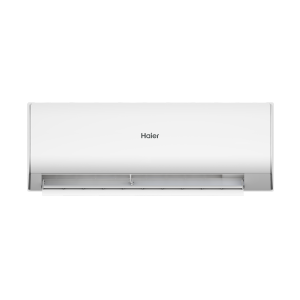
Kwikot has announced its expansion into the heating, ventilation and air conditioning (HVAC) sector. Kwikot
Kwikot, long recognised as one of South Africa’s leading water-heating brands, has announced its expansion into the heating, ventilation and air conditioning (HVAC) sector – a move reflecting broader changes taking place across the country’s energy and built-environment landscape.
The development marks a strategic evolution from a water-heating specialist into a more comprehensive smart energy solutions provider, aligning with growing demand for integrated approaches to indoor comfort, energy management and operational resilience.
For the HVAC&R sector, the significance extends beyond a single company entering a new market segment. It reflects a wider convergence between water heating, climate control and intelligent energy management as buildings increasingly adopt connected, efficiency-driven systems.
For decades, water heating has represented one of the largest components of electricity consumption in South African buildings. In residential applications, water heating can account for as much as 40–60% of electricity usage, while in commercial and institutional environments the energy burden is often even greater due to continuous demand profiles.
As electricity tariffs rise and businesses seek greater resilience against grid instability, the distinction between traditionally separate building services is beginning to disappear.
Heating, cooling, ventilation and hot water systems are increasingly being viewed as components of a single integrated energy ecosystem.
Against this backdrop, the move into HVAC represents a logical extension of existing expertise in thermal management technologies.
South Africa’s energy sector is currently undergoing significant structural change, driven by pressure to improve efficiency, diversify energy supply and reduce dependence on constrained national infrastructure. This transition is accelerating demand for systems capable of optimising overall building performance rather than operating as isolated technologies.
The growing adoption of heat pumps, smart controls, hybrid systems and solar-assisted technologies illustrates how rapidly the built environment is evolving toward integrated energy thinking.
Rather than treating HVAC as a standalone category, the expansion focuses on combining climate control with broader energy-efficiency strategies across residential, commercial and mixed-use environments.
For commercial users, this integrated approach offers several operational advantages.
Improved energy efficiency remains a primary driver, with smarter heating and cooling systems able to work alongside water-heating technologies to reduce overall building electricity consumption. Greater system integration also improves operational resilience during periods of grid instability or load shedding, allowing facilities to manage energy demand more strategically.
From a facilities-management perspective, integrated systems can simplify maintenance, controls and long-term energy planning while supporting sustainability targets increasingly required within modern commercial property portfolios.
The expansion also reflects changing expectations within the South African market, where building owners, developers and facilities managers are placing greater emphasis on lifecycle efficiency, operational reliability and environmental performance.
Importantly, the move into HVAC builds on an existing technology trajectory that already includes solar water heating, heat pumps and smart solar-ready systems designed to reduce pressure on the grid while improving reliability and energy optimisation.
The company’s global partnerships, including its relationship with Haier, also provide access to international appliance and climate-control expertise as South African demand for integrated solutions continues to grow.
Looking ahead, the expansion reflects a broader industry shift away from single-product thinking toward connected building systems designed around modern energy realities.
As South Africa continues navigating rising electricity costs, decarbonisation pressures and infrastructure constraints, the future of indoor comfort is likely to depend increasingly on how effectively heating, cooling and hot-water systems operate together as part of a unified energy strategy.
Supplied by Kwikot