By Eugene le Roux, FSAIRAC, and Eamonn Ryan
As engineering projects grow larger, more regulated, and more socially visible, failures are increasingly traced not to flawed calculations, but to poor management, weak communication and inadequate systems thinking. Cost overruns, delays, safety incidents, and contractual disputes frequently stem from Project Management (PM) deficiencies rather than technical errors. This is part two of a two-part series.

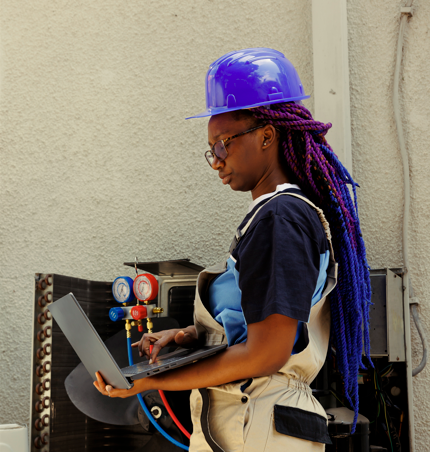
Far from weakening engineering education, a full year of PM would complete it. Freepik.com
PM is often compressed into a single module or short course within engineering programmes. This treatment implies that PM is secondary, when in fact it governs how engineering knowledge is applied.
A full year of dedicated PM education would allow students to develop competence in:
- Project life cycles and governance frameworks
- Risk identification, analysis and mitigation
- Systems engineering integration
- Contractual and commercial decision-making
- Leadership, negotiation and conflict resolution
- Ethical responsibility and legal compliance
These are not skills that can be mastered superficially. Like engineering science itself, they require time, practice and reflection.
The reality of responsibility placed on engineers
Engineers are routinely entrusted with:
- Multi-million-dollar budgets
- Public safety and environmental protection
- Teams of diverse professionals
- Long-term infrastructure and systems
Yet many graduate having never been formally trained to manage people, contracts or organisational complexity. Instead, they are expected to ‘pick it up on the job’.
From an ethical standpoint, this is questionable. Other professions – such as medicine, law and aviation – require extensive training before granting full professional responsibility. Engineering, given its societal impact, should be no different.
Addressing the objection: ‘There is no room in the curriculum’
A common objection is that engineering degrees are already full. However, this assumes that all existing content is equally essential.
The question should not be: “Where can we squeeze PM in?”, but rather, “What knowledge best prepares graduates for professional practice?”
If PM governs how all technical knowledge is applied, then allocating a full year to it is not excessive, it is proportionate.
Mandating substantial PM education would:
- Reduce project failures and cost overruns
- Improve safety and compliance outcomes
- Produce engineers who can lead rather than merely execute
- Strengthen public trust in the engineering profession
- Align academic qualifications with real-world expectations
Employers already expect engineers to manage projects. Formal education would simply acknowledge and prepare students for this reality.
A new baseline for engineering qualifications
Requiring a full year of PM does not mean turning engineers into generic managers. Rather, it ensures they become engineering professionals who can translate technical excellence into successful outcomes.
Such a reform would recognise PM not as an optional add-on, but as a core pillar of engineering competence, on equal footing with mechanics, thermodynamics, circuits or materials science.
Given the central role PM plays in engineering practice, it is reasonable – indeed responsible – to argue that no engineering qualification should be awarded without substantial, dedicated education in this field.
Far from weakening engineering education, a full year of PM would complete it. It would give graduates both blades of the scissors they need: technical mastery and the ability to deliver results in the real world.