By Eamonn Ryan
Demand-controlled ventilation (DCV) is rapidly becoming one of the most discussed strategies in modern HVAC design as building operators seek ways to balance indoor air quality with energy efficiency.
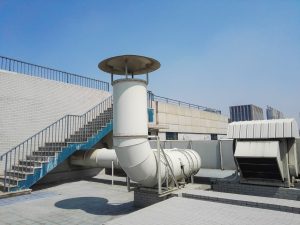
Ventilation duct on building roof Xb100 | Magnific.com
A recent study published in Building and Environment examined how intelligent ventilation strategies can reduce energy consumption while maintaining healthy indoor environments. Rather than operating ventilation systems at fixed rates throughout the day, DCV systems adjust airflow dynamically according to occupancy levels, carbon dioxide concentrations and indoor pollutant measurements.
The findings are especially relevant as concerns about indoor air quality continue growing in offices, schools, healthcare facilities and public buildings.
Traditionally, many ventilation systems have been designed to operate according to conservative fixed schedules. While this approach ensures adequate ventilation, it can also result in excessive energy consumption during periods of low occupancy.
Demand-controlled ventilation changes this approach entirely. Sensors continuously monitor building conditions and allow ventilation rates to increase or decrease automatically depending on real-time requirements.
The study demonstrated that properly implemented DCV systems can achieve significant reductions in ventilation-related energy use without compromising occupant comfort or indoor air quality.
For South African facilities facing rising energy costs and increased focus on operational efficiency, this presents a practical opportunity for both new projects and retrofits.
Carbon dioxide monitoring remains one of the most common DCV strategies. Elevated CO₂ levels are often used as an indicator of occupancy density and ventilation effectiveness. However, modern systems increasingly incorporate additional indoor air quality measurements such as particulate matter, humidity and volatile organic compounds.
The integration of smart controls has also improved system responsiveness. Modern building management systems can now combine occupancy sensors, scheduling software, weather data and indoor air quality analytics to optimise ventilation continuously.
The technology has become particularly important in educational and healthcare environments where indoor air quality directly affects occupant wellbeing and productivity.
The study also noted that the success of demand-controlled ventilation depends heavily on proper commissioning and maintenance. Poor sensor placement, calibration issues or incorrect control settings can reduce effectiveness significantly.
Another challenge involves balancing ventilation reduction with infection control requirements. Since the COVID-19 pandemic, many buildings have increased outdoor air ventilation rates to improve occupant safety. DCV systems must therefore be carefully configured to maintain adequate fresh air while still achieving energy savings.
In the commercial sector, landlords and property developers are increasingly marketing indoor air quality as a competitive advantage. Tenants now expect healthier indoor environments alongside energy-efficient operations.
The growth of green building standards is further accelerating adoption. Many sustainability frameworks encourage intelligent ventilation management as part of broader building performance strategies.
For contractors and consulting engineers, demand-controlled ventilation represents both a technical opportunity and a service opportunity. System design now extends beyond airflow calculations into sensor integration, controls programming and long-term data analysis.
As smart buildings continue evolving, ventilation systems are becoming more responsive, more data-driven and more closely integrated with overall building management.
The future of ventilation may no longer be about simply moving air. It may increasingly be about delivering precisely the right amount of fresh air at precisely the right time.