By Eamonn Ryan
For a city seeking to accommodate an expanding data-centre industry while managing pressure on electricity and water resources, Cape Town has one potential advantage that cannot be engineered into a building: its climate.

That suggests that the future Cape Town data centre may not rely on a single cooling technology.
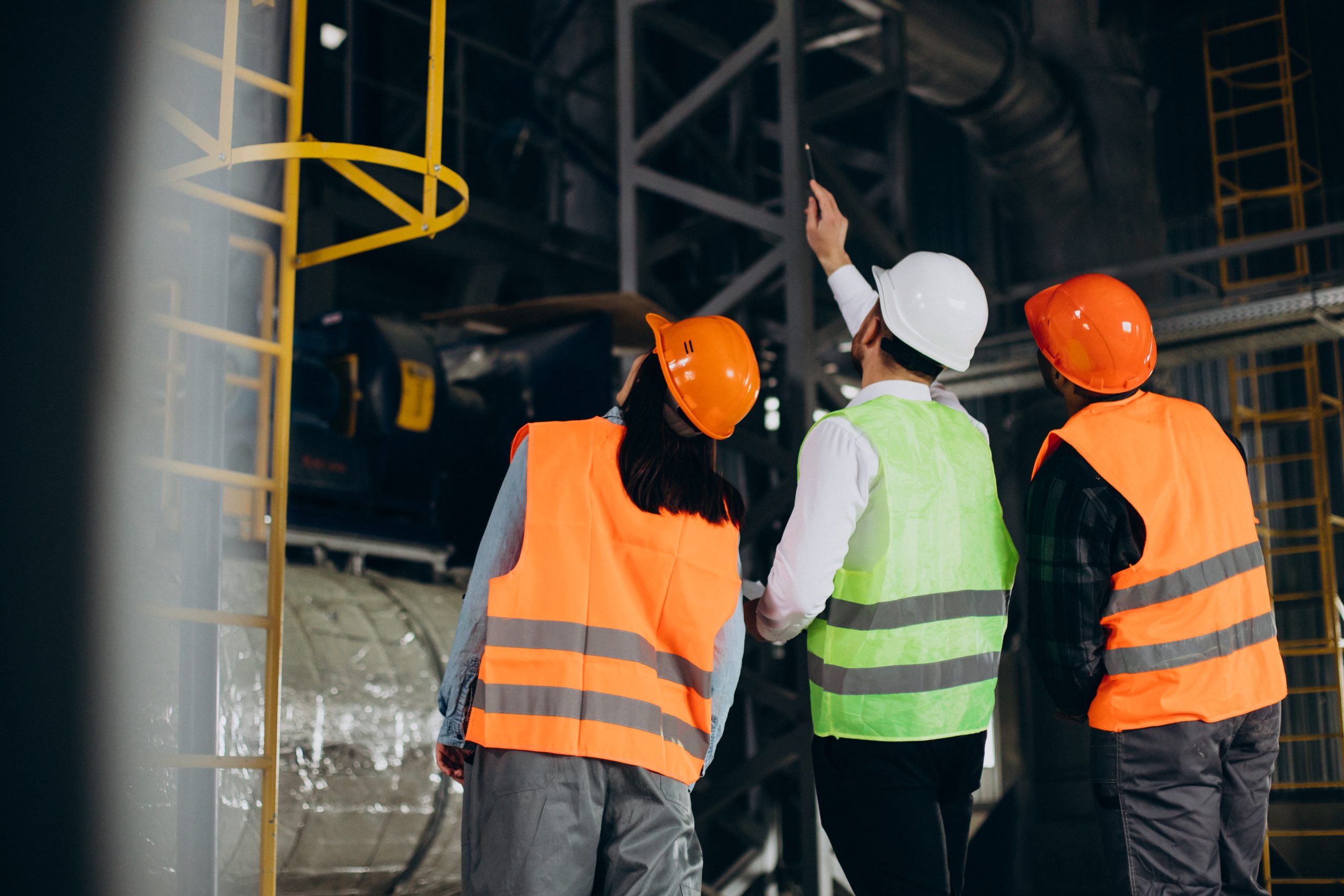
DC Studio | Magnific.com
Compared with many of the world’s major data-centre markets, Cape Town does not experience persistently hot conditions throughout the year. Its Mediterranean climate provides substantial periods of relatively cool ambient temperatures, particularly during winter. That creates opportunities for reducing the amount of mechanical refrigeration required to reject heat from data centres.
The principle is straightforward. If the outside air or another naturally available heat sink is sufficiently cool, the cooling system may be able to operate in an economised or low-energy mode rather than relying continuously on mechanical refrigeration.
ASHRAE’s current guidance for AI data centres specifically identifies airside and waterside economisation as strategies for reducing compressor hours and mechanical cooling demand. It also highlights airflow optimisation and higher supply-air setpoints as ways of expanding the periods during which low-energy cooling can operate effectively.
For Cape Town, this could become an important design consideration. A dry-cooled data centre can avoid the operational water consumption associated with evaporative cooling, while carefully designed air management and economisation can reduce the electrical penalty associated with rejecting heat to the atmosphere.
The objective is not simply to select the ‘coldest’ cooling technology. Data centre cooling is a system-level exercise involving server inlet temperatures, airflow, humidity, heat exchangers, fans, pumps, chillers, controls and heat-rejection equipment.
PUE is useful for assessing the overall efficiency of this infrastructure because it compares total facility energy consumption with the energy consumed by IT equipment. But it should be considered alongside water-related metrics and the actual operating conditions of the facility.
This becomes particularly important as AI workloads push rack densities higher. ASHRAE’s AI data-centre guidance points towards liquid cooling for applications where rack densities reach levels at which conventional air cooling becomes increasingly difficult, while also highlighting opportunities for water-free cooling and heat reuse.
That suggests that the future Cape Town data centre may not rely on a single cooling technology. A facility could potentially combine high-efficiency air cooling for conventional loads with liquid cooling for high-density AI workloads, while using economisation whenever ambient conditions permit. Heat rejection could then be matched to the conditions and the load, rather than running one cooling architecture at full mechanical intensity throughout the year.
This is where the discussion returns to the ocean. The V&A Waterfront has demonstrated that seawater can form part of a major commercial cooling system in Cape Town, while the proposed Equinix facilities demonstrate the growing scale of the city’s data-centre infrastructure.
Taken together, they point towards a broader principle: Cape Town’s future cooling infrastructure should be designed around the resources available at each site.
For data centres, that could mean exploiting cool ambient conditions when available, using dry cooling where water conservation is critical, applying liquid cooling where computing density demands it, and investigating alternative heat sinks such as seawater for appropriately located facilities.
The real advantage may not be one technology, but the ability to combine several.