By Eugene le Roux, FSAIRAC, and Eamonn Ryan
From people to performance: bridging the planning gap.

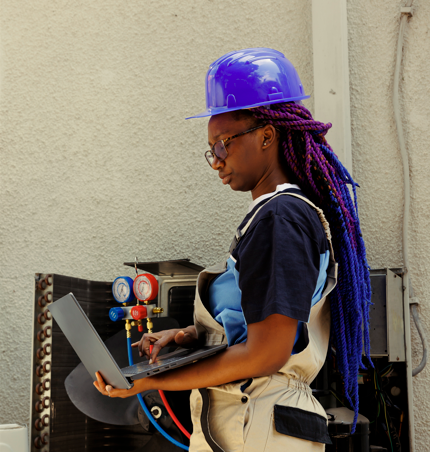
The test plan also outlines failure recording procedures. Pressfoto | Freepik.com
While technical precision is vital, no project succeeds without human insight and effective co-ordination. The second half of a comprehensive project plan focuses on communication, ergonomics and testing – the elements that translate structure into success.
Communication plan: the lifeline of every project
The larger and more complex a project, the greater the communication challenge. A well-designed communication plan ensures that everyone – from project teams to external stakeholders – stays informed, aligned and engaged.
Beyond internal collaboration, communication extends to clients, partners and even the media. Transparency builds trust, while structured messaging prevents confusion. Written communication distribution, meeting schedules, and escalation paths should be strategically structured to optimise time and maintain productivity.
A good communication plan acts like a nervous system – ensuring that information flows smoothly and decisions are made swiftly.
Ergonomics: designing for people, not just processes
Ergonomics ensures that human interaction with equipment and systems is intuitive, safe and efficient. Before project rollout, it’s essential to evaluate whether users possess the skills to operate new technology or whether specialised training is required.
Similarly, consider the support personnel and maintenance teams who will keep systems running. Their expertise, working conditions and equipment interfaces also affect overall project success. By defining skill levels, training requirements and candidate selection criteria early on, a project avoids costly inefficiencies and human-factor failures.
Test plan: the crucible of validation
Testing is the proving ground for every design and process decision. A test plan ensures that all performance, safety and compliance aspects are verified systematically.
Because testing often involves specific environmental conditions or facilities, logistics must be carefully co-ordinated and scheduled well in advance. Testing windows can be costly and limited, leaving little room for delay – hence the importance of contingency and flexibility within the plan.
The test plan also outlines failure recording procedures, data collection methods, and feedback loops to ensure that results lead to actionable improvements.
Final thoughts: the architecture of project excellence
A project plan is more than paperwork – it’s a framework for disciplined creativity. From the clarity of the responsibility matrix to the foresight of reliability and EMI planning, from communication strategies to ergonomic considerations and rigorous testing, each plan forms a piece of the larger puzzle.
The best-run projects are not necessarily those without problems, but those that anticipate, measure, and manage challenges systematically.