By Eamonn Ryan
Each December, we look ahead and ask what forces will most shape our industry in the coming year. As 2026 begins, the answer is unmistakable: refrigerants.
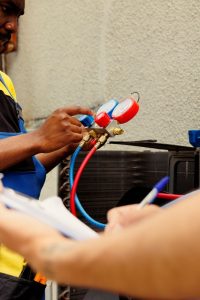
Life Cycle Refrigerant Management (LRM) is no longer a future concept; it is fast becoming the benchmark. DC Studio | Freepik.com
Yes, the rebound in commercial property, the growth of smart HVAC technologies and renewed infrastructure investment all matter. But none carries the same environmental, commercial and technical weight as the choices the HVAC&R industry makes about refrigerants. In 2026, refrigerants move from a background consideration to the defining issue of our sector.
The HVAC&R industry is built on the unseen. We condition air, move heat and create comfort using invisible molecules circulating through compressors, coils and pipework. Yet these same molecules are among the most powerful greenhouse gases known to science. How we manage them will determine whether our industry is recognised as part of the climate solution – or increasingly viewed as part of the problem.
South Africa has reached a decisive milestone. From January 2026, the country is limited to importing just 2.5% of its original HCFC allowance. R22, once the backbone of air conditioning, has effectively reached the end of its life. And the next phase is already clearly defined. High-GWP HFCs such as R134a, R404A and R507 will enter a phasedown from 2029, with an 80% reduction required by 2045.
This transition is about far more than regulatory compliance. It is about credibility. Clients, developers, investors and regulators are asking sharper questions about environmental responsibility and long-term risk. Companies that can demonstrate sound refrigerant recovery, reclamation, leak prevention and responsible disposal will not only stay ahead of legislation – they will earn trust.
Life Cycle Refrigerant Management (LRM) is no longer a future concept; it is fast becoming the benchmark. From system design and installation through servicing and end-of-life recovery, refrigerant stewardship across the entire lifecycle will separate industry leaders from the rest in 2026.
Why this matters now
The climate impact of refrigerants is often underestimated. Just one kilogram of R404A released into the atmosphere has the same warming effect as four tons of CO₂. Multiply that across thousands of systems and years of leakage, and the scale of the challenge becomes impossible to ignore.
Few actions available to the HVAC&R sector can deliver a faster or more meaningful climate benefit than proper refrigerant management. In the coming decade, it may prove to be the single most effective contribution our industry can make to emissions reduction.
Internationally, the shift is already well underway. European manufacturers are transitioning away from R410A towards alternatives such as R32 and propane. Natural refrigerants – CO₂, ammonia and hydrocarbons – are gaining momentum in supermarkets, cold stores and industrial facilities. South Africa cannot afford to trail behind. Equipment standards are increasingly global, and markets that move first inevitably set the rules for those that follow.