By Eamonn Ryan
The following is derived from a Cape Town TechTalk on 10 June by Theo van der Linde, Pr. Tech, Head of Project at SFI Group, on the topic ‘Basics of Airflow Commissioning’. This is Part 3 of a 10-part article.

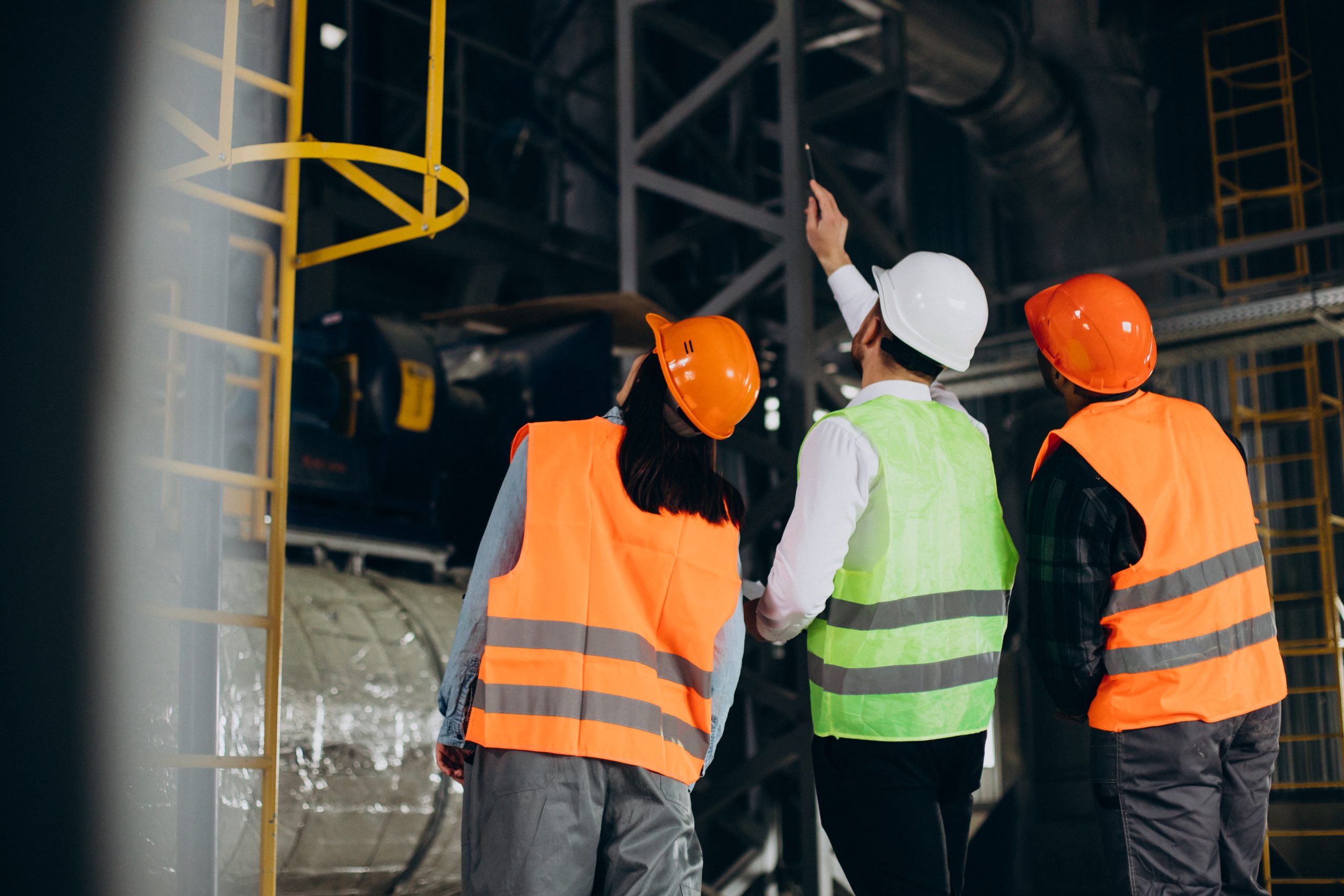
Thorough documentation and effective training are critical for the long-term success and maintainability of any HVAC system. Freepik
Beyond the general tools discussed, specific equipment plays a key role in achieving accurate airflow measurements. While sophisticated equipment is available, many effective tools can be acquired or even custom-built to suit specific business needs and budgets, as long as the underlying principles of measurement are sound.
- Capture hoods (balometers): Often appearing as a ‘makeshift cone’ with a foam sealer on top, the balometer is invaluable for measuring volumetric airflow directly at grilles and diffusers. A vane anemometer or a hot wire anemometer is typically integrated at the base of the hood to take multiple readings and calculate an average flow rate. These devices are particularly effective for terminals, ensuring a complete seal to capture all the airflow from the outlet, providing a direct measurement of the air delivered into a space. Although commercially manufactured balometers are available, many companies successfully construct their own from materials like aluminium, integrating a standard vane anemometer, which, while potentially offering slightly less accuracy than high-end models, remains perfectly viable if used correctly.
- Hot wire anemometers: When direct access to a grille or diffuser isn’t feasible, or for measuring airflow within ducts, a hot wire anemometer becomes indispensable. This telescopic probe, featuring a heated wire and an airflow sensor, can be inserted into a drilled hole in the ductwork. This allows for precise velocity measurements, particularly useful for verifying the main air supply to areas with multiple diffusers, for instance ensuring a duct feeding 100 diffusers carries the required airflow. The principle relies on the cooling effect of air flowing past the heated wire, with the resistance change being converted into a velocity reading.
- Pressure differential sensors (anometers): These critical tools, often resembling compact digital manometers, serve two primary functions:
- Room differential pressure: In controlled environments like hospitals, laboratories or clean rooms, maintaining precise pressure cascades between different zones is crucial to prevent cross-contamination. Pressure differential sensors accurately measure the slight pressure differences between rooms, ensuring the integrity of these critical cascades.
- Static pressure verification: For AHUs and fans, these sensors measure static pressure, confirming that the system is operating at its design pressure point. Significant deviations can indicate blockages, design flaws, or fan performance issues.
- Pitot tubes: Often used in conjunction with a manometer, a pitot tube is another essential tool for measuring air velocity, particularly in higher velocity duct applications. By measuring the total pressure and static pressure, the dynamic pressure can be calculated, from which the air velocity is derived. While often employed in more specialised applications, the Pitot tube provides a robust method for in-duct velocity measurements.
Regardless of the specific brand or design, the fundamental principle of these instruments remains consistent, allowing for accurate and reliable airflow measurements essential for comprehensive commissioning.