By Eamonn Ryan
One of the most enduring lessons of the COVID-19 pandemic was not simply that buildings matter, but that they were not prepared to respond quickly when it mattered most. Systems that were designed for comfort and efficiency were suddenly expected to manage airborne infection risk, often without clear guidance or verified performance. This is part three of a six-part series.
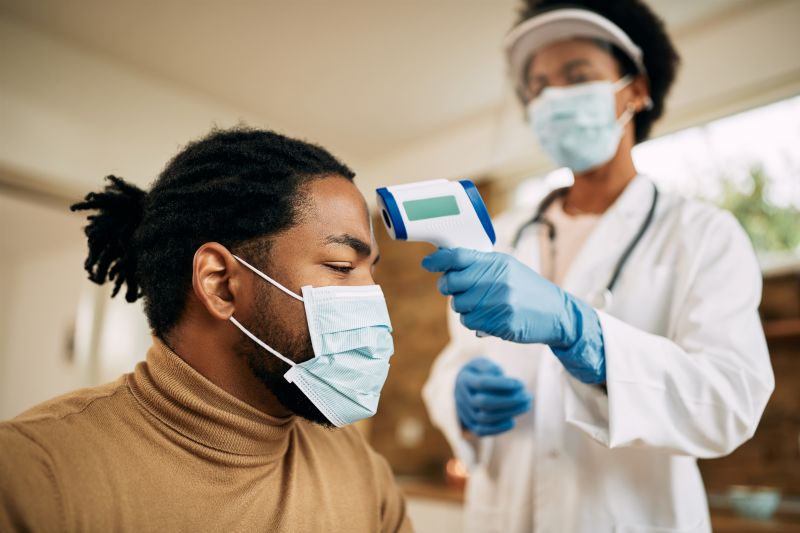
A new operational paradigm for buildings. Drazen Zigic | Freepik
That experience is a central theme of ASHRAE Journal Podcast Episode 26, hosted by Emily Toto, featuring William Bahnfleth and Max Sherman, the chair and vice chair of ASHRAE Standard 241: Control of Infectious Aerosols. As the discussion makes clear, one of the standard’s most important innovations is not a piece of equipment or a calculation method, but a new operational concept: Infection Risk Management Mode (IRMM).
IRMM represents a fundamental shift in how buildings are expected to operate during public health emergencies, by allowing them to switch gears when infection risk rises.
Why ‘normal operation’ is not enough
Most buildings are designed to operate in a single steady state. HVAC systems are optimised for everyday conditions, balancing comfort, indoor air quality and energy use. Prior to COVID-19, there was little expectation that a building would need to substantially alter its air-handling strategy in response to an epidemic.
When the pandemic hit, that assumption proved costly. Building operators were forced to make rapid changes – often without knowing whether systems could deliver increased outdoor air, whether filters were properly installed, or whether controls would respond as intended.
Bahnfleth notes that these decisions were being made “in a panic situation”, precisely when time and certainty were in short supply. Standard 241 was developed to ensure that future responses are planned, tested and ready, rather than improvised.
What is IRMM?
It is the condition under which the additional requirements of Standard 241 apply. When IRMM is activated, a building must provide a specified amount of Equivalent Clean Air (ECA) to reduce the risk of long-range airborne disease transmission.
Crucially, IRMM is not permanent. As Sherman emphasises, Standard 241 does not change how a building operates under normal conditions. It assumes that baseline indoor air quality is already being addressed by existing standards such as ASHRAE 62.1, 62.2 or 170.
Instead, IRMM is activated only when a responsible decision-maker determines that elevated infection risk exists. That decision could come from:
- A public health authority
- An authority having jurisdiction
- A building owner or operator
- In some cases, even the occupant of a building or dwelling
Once IRMM is triggered, predefined systems and control sequences are enabled – without requiring new design decisions or emergency retrofits.
Readiness, not overreaction
One of the most important ideas behind IRMM is resilience. Rather than operating buildings at epidemic-level airflow all the time, Standard 241 promotes the concept of readiness: systems are installed, commissioned and maintained so they can be activated when needed.
This approach avoids unnecessary energy use while ensuring rapid response capability. As Bahnfleth explains, this is similar to how buildings are increasingly designed to respond to other episodic hazards, such as wildfire smoke events or extreme weather.
In fact, many of the upgrades made during COVID-19 – such as higher-efficiency filtration – have already proven useful in non-epidemic situations. Better filters installed for infection control have also reduced exposure to outdoor smoke and particulate pollution, creating benefits beyond their original purpose.
Who decides when IRMM is activated?
Standard 241 deliberately avoids prescribing who must declare IRMM. The standard recognises that epidemic conditions vary widely by region, building type and population vulnerability. Instead, it provides a technical framework that can be used once that decision is made.
This separation of policy decisions from technical implementation is intentional. Public health authorities determine when heightened controls are necessary; Standard 241 ensures buildings know how to respond effectively.
By defining clear requirements for IRMM, the standard reduces uncertainty and helps align public health guidance with building system capabilities.
A new operational paradigm for buildings
IRMM introduces a concept that has rarely existed in ventilation standards: time-dependent operation based on health risk. Buildings are no longer static containers but adaptive systems that respond to external conditions.
This shift has important implications:
- Designers must plan for dual modes of operation
- Commissioning must verify that IRMM systems function as intended
- Operators must understand when and how to activate epidemic controls
As future articles in this series will discuss, this operational mindset is reinforced by requirements for Building Readiness Plans, enhanced maintenance and performance verification.
Looking ahead
IRMM reframes epidemic response as an engineering problem that can be addressed before the crisis begins. It acknowledges that outbreaks will happen again – but that panic, uncertainty and ad hoc solutions do not have to.
By embedding IRMM into Standard 241, ASHRAE has given the building industry a practical mechanism to support public health without sacrificing efficiency or flexibility. In doing so, it moves buildings from being passive risk environments to active partners in epidemic preparedness.