Sakhile Ngcongwane, Business Development Manager at SolarAfrica, says that renewable energy is no longer about a few rooftop panels; businesses that want to reap the benefits must diversify. This is Part 2 of a two-part series.
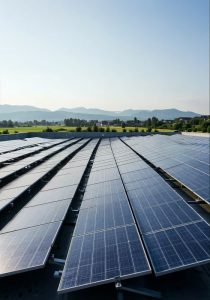
Solar is a fantastic cost-saver for businesses. Freepik
For local exporters, this means that from January 2026, if a product’s emissions are high and not covered by equivalent carbon pricing in SA (read: our weak carbon tax), it could face steep tariffs.
Aside from solar’s green benefits and providing greater energy security when coupled with a battery (which was its primary appeal in the darkest days of loadshedding), it’s also a fantastic cost-saver for businesses. By producing energy onsite – especially during peak hours when tariffs are highest – businesses reduce their reliance on expensive utility supply, avoid peak demand charges, and gain greater control over long-term energy costs.
However, Eskom’s new, recently implemented Retail Tariff Plan (RTP) has shifted the goalposts somewhat; RTP restructures how electricity is billed by introducing higher fixed charges (like capacity and network costs) and lowering the variable rate per kilowatt-hour. For high-energy users in the C&I space, this means greater cost predictability but reduced savings from self-generation, like solar. Even if a business consumes less from the grid, they’ll still pay for being connected. While this supports grid maintenance, it places pressure on businesses to manage demand carefully and optimise energy use to remain cost-efficient.
This is where there is a strong case to be made for energy stacking; offsetting these changes while retaining control and predictability for the end-user. Energy stacking offers a smart, resilient approach for energy-intensive sectors looking to cut costs and carbon. By combining multiple sources – like solar for self-generation and savings, battery energy storage systems (BESS) for reliability, and wheeling to secure power at scale (without physical limitations such as rooftop space) – businesses can optimise supply and usage while reducing reliance on the grid. Energy trading further enables flexibility by allowing companies to buy or sell surplus power.
This diversified mix not only delivers cost savings and energy security, but also improves sustainability credentials – making it easier to comply with future carbon regulations and meet increasingly stringent environmental, social, and governance (ESG) standards.
It’s no longer about a few rooftop panels. Solar isn’t new – but we’re using it now is. The future lies in layering: combining energy sources and technologies to lower costs, boost resilience and stay ahead of regulation. C&I leaders who act now to build flexible, diversified energy structures won’t just cut carbon – they’ll gain a long-term competitive edge.