By Eamonn Ryan
As Africa prepares to host Africa Energy Week (AEW) from 29 September to 3 October 2025, infrastructure has emerged as both a market opportunity and a policy need. This is Part 1 of a two-part series.
Freepik
The continent’s spotlight turns toward a future powered by sustainable energy—one that not only addresses climate imperatives but also anchors industrial growth. For South Africa’s HVAC sector, the implications are profound. Reliable, affordable energy is not a luxury; it is the foundation of indoor comfort, workplace productivity and building performance. AEW 2025 represents a vital pivot point: where energy reform meets HVAC resilience.
South African HVAC operators—from commercial buildings and factories to hospitals and data centres—are navigating an increasingly unstable power grid. The shift toward more affordable and secure renewable energy is no longer aspirational; it is a design and operational imperative.
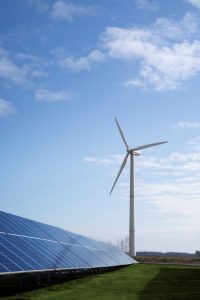
By unlocking greater access to renewable power sources like solar, wind and green hydrogen, AEW 2025 signals a new era of energy independence for the HVAC industry. Off-grid and hybrid power solutions provide a buffer against load shedding and rising electricity tariffs, allowing systems to maintain climate control standards, reduce diesel reliance and lower long-term energy costs. In essence, energy reform enhances both user comfort and economic efficiency.
The HVAC sector cannot afford to rely on outdated energy systems. The collapse of aging coal infrastructure has resulted in rolling blackouts, overburdened backup systems and higher maintenance costs. AEW 2025 places urgency front and centre: the time to transition to clean, cost-effective alternatives is now.
For HVAC installers and facility managers, this means turning to distributed energy resources, rooftop solar integration and smart building management systems to reduce dependency on Eskom’s unreliable supply. Clean energy adoption ensures thermal comfort continuity and reduces per-kilowatt cooling and heating costs.
Public-private partnerships are emerging as a powerful lever in solving South Africa’s energy crisis. AEW 2025 showcases how the private sector is stepping in—not only to invest in renewable generation capacity, but also to modernise transmission and demand-side infrastructure. For the HVAC sector, this creates new avenues for grid-tied and off-grid solutions in commercial and industrial estates—particularly in urban growth nodes and peri-urban zones.
By leveraging private capital and technology, HVAC systems in shopping malls, schools, office parks and manufacturing zones can link into decentralised grids and digital energy platforms. These efforts support energy-efficient buildings, reduce emissions, and align with national climate targets.