By Eamonn Ryan
In a recent ASHRAE Journal Podcast, Kelly Cramm, P.E., Life Member ASHRAE, and mechanical engineer with Henderson Engineers, shared insights drawn from more than 40 years in HVAC design and ASHRAE involvement. Cramm, who has served on numerous technical committees including TC 9.1 and 9.10, offered a comprehensive look at how VRF systems work, common pitfalls and what engineers and contractors must do to ensure long-term system success.
This series of three articles is derived from ASHRAE Journal podcast episode 29 on the topic of ‘VRF basics and proper installation techniques’. This is part three.

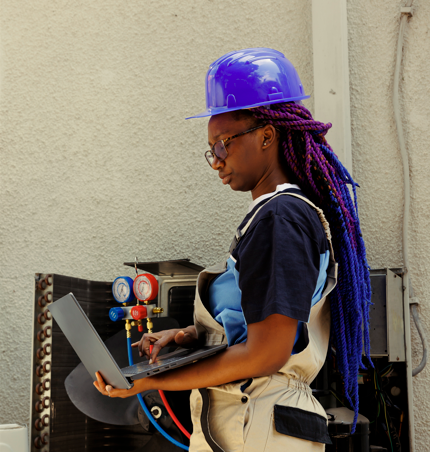
VRF systems perform differently in cold climates because heating capacity drops as outdoor temperatures fall. Gpointsstudio | Freepik.com
During construction, engineers should conduct site visits to verify installation quality:
- Confirm that inert gas cylinders are on site and being used
- Check for the presence and correct installation of side-stream filters
- Cross-check field installation against manufacturer shop drawings, noting deviations that could impact refrigerant charge
- Verify compliance with ASHRAE 15, especially regarding piping in egress paths and small-volume rooms
Contractors must ensure that on-site labor is factory-trained and certified. “Some contractors have one certified installer and multiple active projects. If that individual isn’t on site, unqualified workers may handle critical brazing or piping tasks,” says Cramm.
Both mechanical and general contractors bear responsibility for verifying that qualified personnel are present throughout installation.
Integration and control challenges
Integrating VRF controls into a building management system (BMS) remains a challenge. “Each manufacturer’s system is proprietary: a black box. True interoperability is still evolving, though we’re seeing gradual improvement,” Cramm explains.
Until open protocols are more widely adopted, designers should anticipate integration limitations and plan accordingly.
Climate considerations and backup heat
VRF systems perform differently in cold climates because heating capacity drops as outdoor temperatures fall. Engineers should plan for this by specifying backup heat, ideally integrated with the DOAS.
Manufacturers also offer wind guards for outdoor units, which help mitigate capacity loss in windy, low-temperature conditions.
Lessons and recommendations
Cramm concludes with a checklist of recommendations for designers and contractors alike:
- Educate yourself thoroughly on VRF systems before specifying them
- Always decouple ventilation air using a DOAS
- Perform ASHRAE 15 compliance calculations early
- Verify refrigerant line routing and volume limits for occupied spaces
- Inspect installations for adherence to drawings and use of inert gas
- Don’t rely solely on published low-temperature heating capacities – verify and include backup heat
- Require factory certification for all installers and include it in project specifications
- Understand that VRF systems are manufacturer-specific, and open bidding may require alternate design accommodations
“VRF systems can deliver outstanding performance, but only when designed, installed and maintained properly. With the right practices, they can be among the most flexible and efficient HVAC options available today,” Cramm concludes.